Transformation: Learning from Worms during Lent

Note: Today’s blog is written by guest writer, Pastor Sarah Clark.

Jesus will take our weak mortal bodies and transform them into glorious bodies like his own… -Philippians 3: 21

I like to tell people that I got worms for my birthday…. because it’s true. I did, just not the gross kind of worms! My husband Brian gave me composting worms for my birthday – a 37 gallon bin of dark dirt and many hundreds of (maybe even a thousand) red worms. And now, these worms are happy to call the north-west corner of my basement ‘home.’

I know that composting worms aren’t a normal birthday present. The guys I share an office with remind me of that every time talk of the worms comes up. But I really like my worms. I like that during the week I save all my coffee grounds, veggie scraps, and egg shells in a big Tupperware container.

Then when Saturday rolls around, I take all of that gross, slimy, smelly stuff and I feed it to the worms. I open the bin’s lid, dig a hole, fill up the hole with the week’s gross collection, cover it all up with dirt again, and then top it off with some brown oak leaves from the tree in my yard. In some very strange way it’s satisfying.

The worms don’t say much. They don’t ever say thank you. They don’t cheer every Saturday when I open the lid. But I know they’re content because every week I see baby worms crawling around… eating the previous weeks’ blueberries, spinach leaves, and carrots. And each week, there’s more rich, black dirt for me to use in my garden this spring. Talk about transformation.

Transformation. From disgusting leftovers to rich, wonderful soil. From moldy refrigerator scraps to fertilizer for this summer’s tomatoes. This time of year is a time of transformation. From dark winter to warm, bright spring. From brown to green. From death to life. Lent is all about transformation… and I’m so glad that Easter [Lutheran Church] is talking about transforming at worship, and church school, and confirmation, and book studies, and Chick Talk [women’s group], etc.

‘Transformation’ means that there’s hope for us. If a bin of worms in my basement can transform slimy onion skins into fantastic soil… how much more hope there is for us… who will be transformed by the promises of Jesus Christ on a sunny Easter morning!

Jesus will take our weak mortal bodies and transform them into glorious bodies like his own… -Philippians 3: 21

Sarah Clark is an ELCA Pastor and works at Easter Lutheran Church in Eagan, MN. She graduated from Luther College in 2005 and Luther Seminary in 2010. Sarah seriously loves the Current (a radio station), good food, and the BWCA in northern Minnesota.

Worms in the photos from Julie’s garden.

Until next time, Amen!

(Re) Discovering Your Sacred Rhythms in Lent

The apostles gathered together with Jesus and reported all they had done and taught. He said to them, “Come away by yourselves to a deserted place and rest a while.” People were coming and going in great numbers, and they had no opportunity even to eat. So they went off in the boat by themselves to a deserted place.  –Mark 6:30-32.

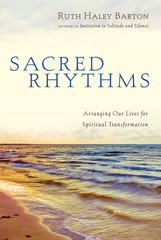
In the beginning of the book Sacred Rhythms, Ruth Haley Barton describes a time she felt Christian fatigue syndrome. Although heavily involved in doing church activities and service for Christ, she no longer felt the joy and peace she expected to feel in giving her life so fully to God.

I believe that people who are alive with love for God sometimes can become so busy doing for God or for others, or learning about God, that they can forget to just spend quality time with God.

This situation is compounded by the fact that we live in a culture that heavily promotes busyness, high productivity, multitasking and, in general, doing over be-ing (the poor economy doesn’t help). People I know who visit other parts of the world often comment that people in other countries are not such workaholics. Some cultures have shorter work days, more vacation time, and longer lunch hours–and they actually think Americans are crazy to want to focus so much on their jobs over relaxation with family and friends.

For those of us who follow Christ, this raises an interesting question: How do we spend time with God? Certainly, God is always with us, everywhere we go, but how are we “with God”? That is, how do we find time to make our hearts and minds attentive to God’s presence in the midst of our everyday lives? How do we experience God?

One way is to examine how Jesus approached work and ministry. In the biblical passage above, the apostles are getting back together after having been sent out in pairs to preach the gospel, heal the sick, and cast out demons. They have also just been given the news of the death of John the Baptist.

What Jesus does at this point in the story is rather remarkable. Jesus does not ask the disciples to use their success to build media hype. He doesn’t require new multitask methods to increase the profit margin (baptizing with one hand while healing the sick with the other?). Jesus doesn’t send them into battle to revenge the death of John the Baptist.

Instead, at the height of all their ministerial productivity and popularity, Jesus says:

Come away by yourselves to a deserted place and rest awhile.

I wonder if the disciples were surprised at this sudden shift of gears. Maybe they thought to themselves, Are you kidding? Didn’t you just commission us to spread the good news and heal the sick? Now you want us to ignore the needs of these people, escaping out into the wilderness? Could you make up your mind?

Jesus isn’t interested in milking the media, maximizing profit, or getting more done in less time. Jesus doesn’t view people as electronic gadgets that never need sleep (well, even those need recharging!). Jesus treats every disciple (and all people) the way best friends or intimate lovers treat each other, saying, in effect:

Let’s get out of here. Let’s go someplace where we can be alone.

In the story, Jesus and the disciples escape the crowd in the boat, going off to rest, to talk, to pray. The mob, with their many legitimate needs, would find them tomorrow, at which time they would be lovingly served.

People reading this blog do a great many things to serve and love God’s people–and what a great thing indeed that is! But among the many things you “do” this Lent, may God bless you with the rediscovery of quiet moments tucked here and there, an awareness of God’s presence during your work, or perhaps even a whole day or two to run away for a tryst with the One you love above all others.

Until next time, Amen!

Friends with You by John Denver

You may be thinking I’m a little slow to sign up for Facebook. Now that I’m on there, I’m astounded at the number of past friends I’ve been able to connect with, if only just to see their photo faces smiling at me on my computer screen.

It makes me think of how we are all truly connected in the “mystical Body of Christ” or, to put it another way, the interconnectedness of all people so many spiritual writers ponder.

Saint Valentine’s Day is a good day for pondering the our many relationships. I think of John Denver’s song “Friends with You”:

Friends I will remember you, think of you
Pray for you
And when another day is through
I’ll still be friends with you

That’s how I feel about all of you: even when I am cooped up in my writer’s studio, I’m thinking about you, praying for you… and am grateful for your many prayers for me.

If you feel like a little break from your work, a mini-spiritual meditation, check out this short YouTube video set to the song:

[If you are receiving this in email, you may need to go to my blog to see the video. Or, visit YouTube and search “John Denver Friends with You.” The video is by Catbrush 123. ]

Happy Valentine’s Day–and, until next time, Amen!

Prayer Walking for Health of Body and Soul

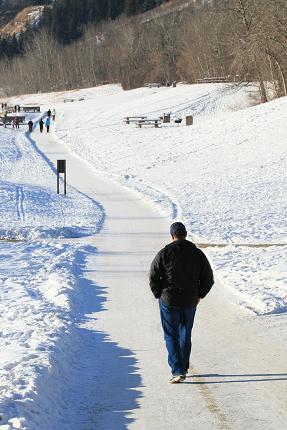
“Don’t pray, just walk!” he said forcefully. I couldn’t believe my ears. This priest—this strict, traditional, and prayerful priest—was telling me not to pray? 

When I protested that as an elementary school teacher and married woman I didn’t have time for walking every day, this busy pastor described his own “morning constitutional” (rain or shine) and the many personal benefits he’d reaped from this daily ritual. 

My personal and professional life had reached an all time high in stress. I had, after all, asked his advice. So, I laid out my teaching supplies each night, changed my alarm clock setting, and stopped off at a large park each morning on the way to work.

The discipline of getting up earlier and dressing for the weather was a little challenging at first, but as the weeks passed, I began to look forward to this time of silence before being swarmed with energetic children each day. I delighted in the changing colors of the wildflowers, the squirrels and bluebirds that darted and danced before me, and the huge expanse of the ever-changing morning sky.

And, I confess, I began to pray. I remembered that my pastor had said not to pray. But, when I saw a fresh carpet of snow, sparkling in the sunshine, I couldn’t help but thank the God for the beauty of nature. As I walked, I sometimes mused over various challenges in my career, devising new strategies for teaching, and the next thing I realized, I’d be asking the Lord for help with a “difficult” student. Other times, I would feel a quiet, peaceful feeling of solitude with God. I just couldn’t help but pray!

As a busy mom and teacher, Janet Holm McHenry has discovered that combining prayer and walking provides additional space for her personal prayer time. In her book, “PrayerWalk” (WaterBrook Press, 2001), McHenry explains that, although she is not a “morning person,” prayerwalking in the early morning works well with her family’s schedule, provides the exercise she needs, and allows her time to pray without interruptions.

At first, McHenry prays for her family while she is walking. Later, her daily walks open her eyes to the needs of others outside her circle and she begins to pray for them as well. As the months pass, McHenry notices little changes taking place in herself that she attributes to prayerwalking. She gradually overcomes some of her fears. Her general mood and outlook on life improves, due to what she calls “spiritual endorphins.” One morning, her son even catches her singing while making school lunches.

In the magazine “Spiritual Life” (Spring 2002), Richard Hurzeler, a grandfather and retired college professor, also writes about the benefits of prayerwalking. Naturally he enjoys time with his family, but prayerwalking provides him with some quiet time while also stretching and toning his muscles. Hurzeler enjoys the change of scenery while looking and listening for the presence of God within himself and others. He reminds us of Mother Teresa’s words: “We should make every effort to walk in the presence of God, to seek God in all persons we meet, to live our prayers through the day.”

“Don’t pray, just walk!” When I think back to these words, spoken to me so many years ago, I wonder, was the priest using reverse psychology? Or was he opening me to new prayer forms? Or maybe both?


Note: Article above reprinted from the syndicated column “The Prayerful Heart” by Julie McCarty, which appeared in Catholic newspapers around the country a few years ago.

Julie’s new website

I’ve been building a new writer website on WordPress. I still have more archived articles to put in the writing section, but I would love to hear what you think of it. How does it look and feel in your browser? Pros and cons? Suggestions?

Here’s the link:  www.juliemccartywriter.com

Sunrise through Winter Frost: Reflecting Divine Light

Jesus spoke to them again, saying, “I am the light of the world. Whoever follows me will not walk in darkness, but will have the light of life.” –John 8:12.

Not much snow in Minnesota this winter, but the frost patterns have been lovely. Here’s a photo I took one morning of sunrise, looking through our window and the frost on the storm window:

Sunrise through Winter Frost–by Julie McCarty– (click on photo to enlarge)
 
The sparkles you see in this photo are reflections of the sun (camera flash was off). We often think of all the sin and darkness in our world, but this picture reminds me of the beauty of human souls reflecting the light of God. When we open our hearts to God, when we act in ways of love, we become reflections and conduits of God’s light in the world. So often, we are swimming in this light of God without even thinking about it.
 
Spiritual writer Maria Ruiz Scaperlanda put the following quote on her Facebook page today, and I share it here because I think it goes well with the above photo:
 

“We cannot attain the presence of God because we’re already totally in the presence of God. What’s absent is awareness. Little do we realize that God is maintaining us in existence with every breath we take. As you take another breath (right now!) it means that God is choosing your existence now, and now, and again now…Prayer is not primarily saying words or thinking thoughts. It is, rather, a stance. It’s a way of living in the Presence, living in awareness of the Presence, and even of enjoying the Presence. The full contemplative is not just aware of the Presence, but trusts, allows, and delights inside of an active and experienced Union.” ~Fr. Richard Rohr in “Everything Belongs: The Gift of Contemplative Prayer.”

We are always in the presence of God, but we forget God is with us. Like each little “snowflake” of frost in the photo, we are already in the presence of the God. All we have to do is open our hearts and absorb the light of God’s presence. And, in so doing, our souls are capable of reflecting that light of love to others, who in turn reflect God’s light to still others… a ripple effect of light and love.
 
Until next time, Amen!
 

Julie now on Facebook

Violet in Nerstrand Woods--photo by Julie McCarty

Are you on Facebook? I finally caved and signed up just this week. I’m completely new at this, so it may take me awhile to get the hang of it.

I would love to have you as a Facebook friend… so please do look me up. I plan to focus on spiritual quotes, encouraging words, nature photos, practice watercolor paintings, and a few thoughts about life in general. And maybe a bit of personal stuff, too.

There are pros and cons about Facebook, but I want to be able to communicate better with people I care about–and that includes you!

I especially want to listen to what you have to say! So if you are timid about posting here on my blog, write to me in some other way. (Facebook is just another way to send messages.)

You are always welcome to send me email messages, too. Just visit the contact page. You can use the contact form or the email listed at the bottom of that page. I try to answer every personal email with a personal response.

I care about what you think and feel.

Coming soon to Easter Lutheran Church in Eagan: Sacred Rhythms

Sneak preview:

When Lent begins later this month, Easter Lutheran Church in Eagan, MN will be using the program Sacred Rhythms by Ruth Haley Barton. Based on gospel stories and ancient Christian practices, this program includes such topics as longing for more, praying with Scripture, making space for God, finding God in everyday experiences, and cultivating our own sacred rhythms.

“Sacred Rhythms” will be offered at various times beginning mid-Feb:

  • Wednesday afternoons  with Pastor Paul,
  • Sunday evenings with Pastors Kris, Kevin, & Sarah,
  • Monday evenings or Thursday mornings at Chick Talk women’s group with Julie McCarty (yep, that’s me). 

For details on exact times, dates, locations, visit easter.org (click on Lenten worship), or call the parish office,651-452-3680.

If you cannot attend, the Sacred Rhythms book, participant’s guide, and DVD make for great discussions in small groups or as springboard for Lenten journaling.  

More Info (FAQ’s):

  • Want to preview the sessions? Visit YouTube and search “ruth haley barton sacred rhythms.”
  • Which book do I buy? Easter Lutheran will be selling the main text for $15, or you can order from major booksellers online. If you are in a small group that hates reading, you could watch the DVD segments together and do the participant’s guides with your bibles.
  • What if I’m not a member at Easter, or not even Lutheran? Come anyway! All are welcome. No fee except for buying the book if you want.
  • What if I can’t make all the sessions? Slip into one of the other discussion groups that week, or just come whenever you can.
  • Can I bring a friend? Is it for both men and women? Yes! All are welcome! That includes interested teens, too. (Chick Talk, as the title suggests, is a women’s group…)

Would Jesus Allow Open Discussion on Controversial Topics?

This past Sunday, the Minneapolis Star Tribune ran a front page article entitled Priests told not to voice dissent,” the gist of which is contained in this quote:

Archbishop John Nienstedt is warning Catholic clergy across Minnesota that there should be no “open dissension” of the church’s strong backing of a proposed amendment to the state Constitution that would define marriage as a union only between a man and woman. 

The Roman Catholic archbishop is not merely asking clergy to remain neutral on public issues while speaking in the pulpit. Instead, he is pressuring pastors and parishioners to be proactive on the issue even if it is against their conscience, by  pushing “marriage prayers” smack dab in the middle of Sunday Mass, creating parish “marriage committees” to support the amendment, and inviting “marriage teams” to come speak to high school students.

Of course, church leaders certainly have the right–and the duty–to speak publicly about issues of faith and morals, and about anything that might make the world or church a better place. However, based on my past experiences, I rather doubt any of these marriage speakers will offer any genuine, mutual discussion (this vote, after all, applies to all of society, not just Catholics, so all angles ought to be openly discussed, even at a church meeting).

Catholics today are facing the same kind of repressive environment that exists under dictatorships. It is becoming dangerous to disagree on controversial topics. One cannot write or speak publicly if one disagrees with church teachings on such topics as women’s ordination, married clergy, gay rights, birth control, abortion, liberation theology, or even how one views Mary (as in the case of Tissa Balasuriya). 

Regarding the case of the proposed marriage amendment, the archbishop is so determined that in a recent speech/letter to priestshe reminded them of their vows of obedience. In addition, the archbishop wrote a letter to one priest threatening to remove him from active ministry if he spoke publicly against church teaching (the marriage amendment being one example in the letter). Some people would call that spiritual bullying.

Conservative Catholics spout the slogan “error has no rights,” but “error” is not a person. People do have rights. People are God’s beloved sons and daughters–and Christ often listened carefully to others, even asked about what they thought: How do you interpret the law? What do you want? Who do you say I am? What are you discussing as you go your way?

Since Sunday’s Star Tribune article, I have been trying to think of a single instance in which Jesus silenced a conversation, or bullied people into thinking his way.

Hmmmm… In Mark’s gospel, Jesus does ask the disciples to keep quiet now and then, but the secret is all the good works he’s doing, that he’s the Messiah, not the squelching of his opposition. Today’s equivalent would be a bishop working a miracle and then telling the priests to keep it secret, because, after all, he’s a very humble guy.

Maybe we might think the time Jesus turned over all those money tables in the temple was a little like silencing someone with opposing views. Today’s equivalent would be a bishop blasting American corportations for their greed on a nationally televised event, or publicly destroying the number balls used to select lottery winners. Or maybe selling the bishop’s mansion to build a place for the homeless.

The only time I can remember Jesus ever coming close to silencing someone is when Peter–whom Catholic call the first pope–tells Jesus he ought not to go to Jerusalem because of the danger. To this, Jesus replies:

Get behind me, Satan! You are an obstacle to me. You are thinking not as God does, but as human beings do. (Matthew 16:23)

Those are pretty strong words–even harsher than “shut up.” Jesus knew that God wanted him to go to Jerusalem even if it meant risking death on a cross. When pushed between following the advice of the first pope or what his Father in heaven wanted, Jesus chose to obey his Father, trusting that God would bring about something good (through his cross and resurrection, the salvation of the world!).

In our own times, those of us who follow Jesus must listen carefully not only to religious leaders, but also to those whose voices are not easily heard: the poor, the abandoned, the lonely, the sick, and those who are most ill-treated and misunderstood. We must ponder our sacred scriptures and pray to God, asking the Holy Spirit to guide each one of us to make good choices.

Even if it means disagreeing with “Peter.”

A Spiritual Word for the New Year

At the end of last year, I decided to try a spiritual practice suggested by writer Christine Valters Paintner’s on her blog, “Abbey of the Arts.” One selects a single word to ponder for an entire year. Perhaps it would be more accurate to say the word chooses you. As Christine explains:

In ancient times, wise men and women fled out into the desert to find a place where they could be fully present to God and to their own inner struggles at work within them. The desert became a place to enter into the refiner’s fire. . .   

 Many people followed these ammas and abbas, seeking their wisdom and guidance for a meaningful life. One tradition was to ask for a word – this word or phrase would be something on which to ponder for many days, weeks, months, sometimes a whole lifetime. This practice is connected to lectio divina, where we approach the sacred texts with the same request – “give me a word” we ask – something to nourish me, challenge me, a word I can wrestle with and grow into. —Abbey of the Arts, blog post of  Dec.21, 2011.

Christine embraced the word “savor” one year and “sanctuary” the next, exploring layers of meaning over the course of time. She invited others to post their special words for 2011, so I posted the word “consecrate” (to dedicate something for a special purpose).

Using a personal theme word for a year was so helpful, that I’m selecting another word for 2012. Here’s what I wrote about my word on Christine’s blog:

Co-create” — God, of course, is the Ultimate Creator, but each of us can cooperate with God’s grace to make the world a better place. I want to think about what it would mean to take seriously that God wants to lead me in my daily tasks, writing, painting, even cleaning house (something I hate) to “co-create” something positive, maybe even something graced and holy, something that maybe is a mirror of God’s love for us. Dare I dream of such a thing?

Other readers of Christine’s blog chose words such as “healing,” “birthing,” “welcoming,” “question,” “fallow,” and “loving kindness.”

Is the Spirit inviting you to ponder a word for the upcoming year? If you are not sure how to select a word, I suggest checking out the Abbey of the Arts blog of Dec. 21 for ideas. If you choose to post your special word,  you may qualify for a free gift from the site’s online “abbess.”

Until next time, Amen!