Living Water, Holy Spirit, and Solitude at an Iowa Stream

On the last day of the festival, the great day, while Jesus was standing there, he cried out, “Let anyone who is thirsty come to me, and let the one who believes in me drink. As the scripture has said, ‘Out of of the believer’s heart shall flow rivers of living water.'” Now he said this about the Spirit which believers in him were to receive; for as yet there was no Spirit, because Jesus was not yet glorified.  (John 7:37-39)

Wolf Creek--photo by Julie McCarty--Note: click on photo to enlarge

Flowing water fascinates me. When I was a little girl, my best friend had a house with a creek flowing near her house, and we would play for hours within and around the water.

Jesus tells us that he is the living water that satisfies all our deepest longings. The Spirit is flowing in Christ, flowing through him to everyone around him.

What surprises me when I read this passage today is the part about the water of the Spirit flowing out of those who believe in Christ. In all the times I heard this passage proclaimed at church, I never noticed that part. Here’s what the footnote in my bible says:

Jesus is the true water of life, who turns the symbol into reality. . . Believers become channels of life to others, through Christ’s Spirit given at Pentecost after he was glorified (crucified, risen, ascended).    –From the Oxford Annotated Bible, NRSV.

Not only was Christ both human and divine, his human side was a channel of the Holy Spirit–and we, too, are called to be channels of the Holy Spirit, flowing out to give to others in abundance.

Today I am offering you a gift that relates to this meditation: a 2 minute escape from your present work into the environment of a flowing, modern day stream named Wolf Creek. This is a very short video I took on a recent trip to our favorite country getaway in the rolling hills of northeastern Iowa, the “Morning Mist Cabin” owned by Larry and Jo Thein. (Thanks to them for letting us share it, and thanks to my husband Terry for his techie expertise in getting it setup on YouTube.)

As you watch this video, you might want to just enjoy the ability to getaway for a moment from the busyness of daily life, taking in the sights and sounds of God’s creation in nature. You might consider Jesus, the Living Water, and how the Spirit is the water that flows through you to others. Or maybe you just want to wait and see what the Spirit might inspire in you this day.

Note: You can enlarge the picture using the little box with four arrows in the bottom right of the picture to enhance the experience of “getting away from it all,” but just be aware that the picture won’t be as sharp. Move your mouse to see how to reduce it again. 

Until next time, Amen! 

Pentecost and Saint Cyril of Jerusalem on the Holy Spirit

The water that I will give will become in them a spring of water gushing up to eternal life.Jesus  (see John 4:14)

Christians celebrate Pentecost this Sunday, the feast commemorating the coming of the Holy Spirit. In the Liturgy of the Hours, there is a lovely meditation on the Spirit by Saint Cyril of Jerusalem, a famous teacher in the ancient church.

Like other church leaders of his age, Cyril reads the story of the woman at the well with an eye for symbolic imagery. He views the water that Christ offers the woman as a symbol of the Holy Spirit. Cyril writes:

The water that I shall give him will become in him a fountain of living water, welling up into eternal life. This is a new kind of water, a living, leaping water, welling up for those who are worthy. But why did Christ call the grace of the Spirit water? Because all things are dependent on water; plants and animals have their origin in water. Water comes down from heaven as rain, and although it is alway the same in itself, it produces many different effects, one in the palm tree, another in the vine, and so on throughout the whole of creation. It does not come down, now as one thing, now as another, but while remaining essentially the same, it adapts itself to the needs of every creature that receives it.

This is a lovely way to describe the eternal, unchanging nature of the Spirit while at the same time explaining the dynamic way the Spirit moves and acts in our lives. Like a “personal trainer” or an intimate friend, the Spirit works one-on-one with each person in the way best suited to his or her personality, giftedness, life situation, etc.

Cyril also explains that the Holy Spirit enters the soul like water enters a dry tree. The tree produces fruit because of the action of the water; so too, the human soul “bears the fruit of holiness when repentance has made it worthy of receiving the Holy Spirit.”

These fruits of the Spirit vary from person to person:

The Spirit makes one man a teacher of divine truth, inspires another to prophesy, gives another the power of casting out devils, enables another to interpret holy Scripture. The Spirit strengthens one man’s self-control, shows another how to help the poor, teaches another to fast and lead a life of asceticism, makes another oblivious to the needs of the body, trains another for martyrdom. His action is different in different people, but the Spirit himself is always the same. In each person, Scripture says, the Spirit reveals his presence in a particular way for the common good.  

St. Cyril’s reflection makes me think of the theological prinicple of “unity in diversity.” It reminds me that my calling maybe different than your calling, my gifts, prayer style or spirituality may be different than yours, but that’s okay. God didn’t create us to be clones of each other.

We are united not through having identical gifts or even precise agreement on every doctrine, but rather, it is the water of the Spirit, the presence of God within and among us,  who unites us with bonds of love. In this life, we will never have perfect agreement among all peoples, but we can be united in the Spirit, the water of eternal life, that nurtures all of us together to grow into the one Mystical Body of Christ.

For me, and I hope for you, that’s good news.

Until next time, Amen!

Notes: Passages quoted from Cyril of Jerusalem are from volume 2 of The Liturgy of Hours (Catholic Book Company), pages 966-967. Photos on this post by Julie McCarty, 2011.

Prayer book offer still good

Remember the special offer, back a few posts, about how to win a daily prayer book ? Weeelll, um, we do not yet have a winner, but we are getting closer. If you know anyone who might like this blog, please let them know they might win the book if they sign up for e-mail subscription.

DEADLINE is June 30, 2011. See May 4th post for details.

P.S. If we don’t have a winner by June 30, I’m going to award the book to whoever comes closest. 🙂  Look for an announcement of the winner in early July.

Thanks for the prayers

Meditation Garden at Banner Estrella Medical Center in Phoenix, Arizona--photo by Julie McCarty

A big thank you to all of you who have been praying for my dad and our family. Your continued prayers are appreciated. (Dad said it was okay to put this on my blog.)

For those of you who don’t know, my dad has been in and out of the hospital lately with the sudden onset of an aggressive form of lymphoma. The doctors are doing their best to treat it, but the situation is rather complex. Dad spent this past weekend at home, but this afternoon he was put back in the hospital.

My dad and all the family is grateful for all the prayers & good thoughts/positive energy being sent our way.  —Julie 


Mary, Mother of Jesus, the Married Contemplative

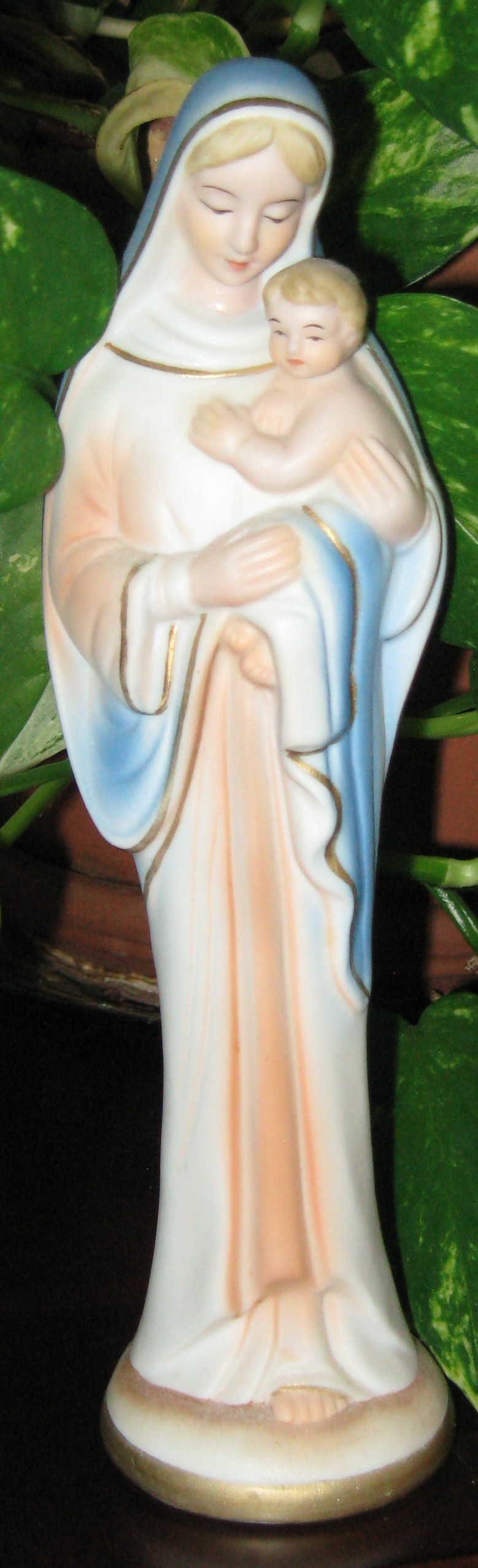
Some Christians think of the month of May as a time for honoring the life of Mary, the mother of Jesus, known also as “Mother of God” or the “Theotokos” (the God-Bearer). Where I live, May is the month when the earth comes to life again after the long Minnesota winter, and families celebrate Mother’s Day. Below is a spiritual reflection I wrote about Jesus’ mother, a short excerpt from a book I wrote.
 

And Mary kept all these things, reflecting on them in her heart. –Luke 2:19.

Was Mary a nun or a wife? Growing up Catholic, I associated Mary more with nuns than with married women. After all, she wore long, voluminous garments and a veil like that of the nuns who taught my religion class. Her statue was displayed clear across the church from that of Joseph; even in the manger scene they kept a respectful distance. Although I hadn’t a clue about the meaning of the phrase “ever virgin,” I clearly understood that Mary and Joseph were a special case.

The above Scripture verse (along with a similar one, Luke 2:51) is often used to represent the prayerful, contemplative side of Mary. She marvels at the surprise visit of the shepherds, who speak of heavenly beings revealing that her baby is the Messiah and Lord. Mary carefully stores the amazing details into the motherly scrapbook of her heart.

In the Bible, the “heart” is the hidden center of the entire person. In the heart one thinks, discerns, feels, hopes, reasons, and intuits. The heart is the inner space within, the place in which one encounters the Living God. When Mary ponders things in her heart, she is prayerfully mediating on the mystery of God acting in her life. Luke paints a picture, not of a stereotypical peasant woman, thought to be of no account, but of a woman who thinks, reasons, remembers, and meditates, trying to put all the pieces of her life together to make sense of God’s plan.

Because of this, Mary is sometimes called the contemplative par excellence. Yet, contrary to what we might subconsciously think, Mary was not a vowed nun. She experiences God’s presence while cooking for her family, nursing her baby, or stroking her husband’s hair as they drift off to sleep. She meditates while walking to the town well to fetch water and prays while baking bread or weaving fabric. Mary’s heart is open and pure, praying and acting in total communion with God at all times. In short, she is the married contemplative.

–Excerpt from The Pearl of Great Price: Gospel Wisdom for Christian Marriage by Julie McCarty (Liturgical Press), pages 28-29.

Spiritual Aerobics

For journaling or small group discussion 

1. How do I think of prayer and the life of married couples, families, or other laypersons? Is deep holiness and prayer only for those viewed as the “professional religious” (priests, ministers, parish staff, nuns, etc.)? Is that what Jesus taught in the gospel?

2. Get creative: How would you portray Jesus’ mother in drawing, collage, paint, clay, or other art form? You don’t have to be an artist. How do you imagine her daily life? How did she pray when the angel Gabriel wasn’t visibly present?

3. Is every Christian or every human called to be contemplative? Just what does that word “contemplative” mean to you, and what might it mean for the future of Christianity?

Living Stones, Spiritual Milk, and Soul Growth

Come to him [Christ], a living stone, though rejected by mortals yet chosen and precious in God’s sight, and like living stones, let yourself be built into a spiritual house, to be a holy priesthood, to offer spiritual sacrifices acceptable to God through Jesus Christ.  — 1 Peter 2:4-5.

This week I have been pondering this verse, taken from the First Letter of Peter, which will be proclaimed this Sunday at many Christian churches throughout the world.

Peter—whose name means “rock”– calls Christ a living stone, and later in the passage, a cornerstone, the important foundation for the beginning of a building. He also calls us living stones that God is building into a spiritual house or temple. Although each one of us is uniquely gifted, each one of us has our identity and space in the building, our relationship to each other. Individually, we are loved by God, but together we form something even better and bigger than ourselves, the “spiritual house” God is building.

Having been raised Catholic, I can’t help but notice that Peter, the Rock, whom many call the first pope, doesn’t say anything about popes, cardinals, bishops, or other hierarchy in this reading. All are “rocks,” built together upon the Cornerstone, Christ. Peter calls all of us together a holy priesthood, whose purpose is to offer spiritual sacrifices to God.

But what is meant by living stones?

Unlike inanimate matter, Peter doesn’t want us to just “sit there,” motionless. We are to be strong, like rocks, in our faith in God, no matter what the weather brings, but we are also to be alive, growing, moving, and changing more and more each day into the image of Christ.

Churches who use the Revised Common Lectionary this Sunday, will hear the words of Peter just prior to these verses, and I think it’s worth looking at how these verses illuminate what the writer meant by “living” stones. Just before he writes about the living stones, Peter writes:

 Like newborn infants, long for the pure, spiritual milk, so that by it you may grow into salvation—if indeed you have tasted that the Lord is good.  (1 Peter 2:2-3)

At first I didn’t think there was any connection between this verse on drinking spiritual milk and the living stones. However, the original text would not have had paragraph indentations and periods at the end of sentences. The writer was flowing from one thought to the next.

Peter exhorts us to long for spiritual milk from God (food like Eucharist?), so that we can keep growing in the Lord. We forget to consider that in biblical times there was no packaged infant formula. The only way an infant was fed was directly from the mother’s body (or a “wet nurse”). The original hearers would have imaged a mother feeding her baby when they heard this verse and perhaps thought of God as feeding them directly from himself in the Eucharistic feast. (I am not the first person to think of this. See May 5th post.)

Although we must be strong in faith, like rocks, we are also to be fluid, moving, and growing, like a newborn baby. God is both the builder who is creating a strong church community and the mother who is feeding us directly with God’s self. (I think of Eucharist here, but I suppose additionally, in a mystical sense, the Spirit feeds us in the depths of our hearts as well.)

If you stop to think about it, these are amazing ideas: a God who is constantly supporting us, feeding us, building us up, not only individually, but together, in interdependent relationships.

O God, Sacred Builder and Divine Nurturer, help us to be strong as rocks in our faith in You, and as innocent and reliant upon You as a newborn baby is upon his or her mother.

Until next time, Amen!

Sumi Painting, Chi, Creativity and the Spirit


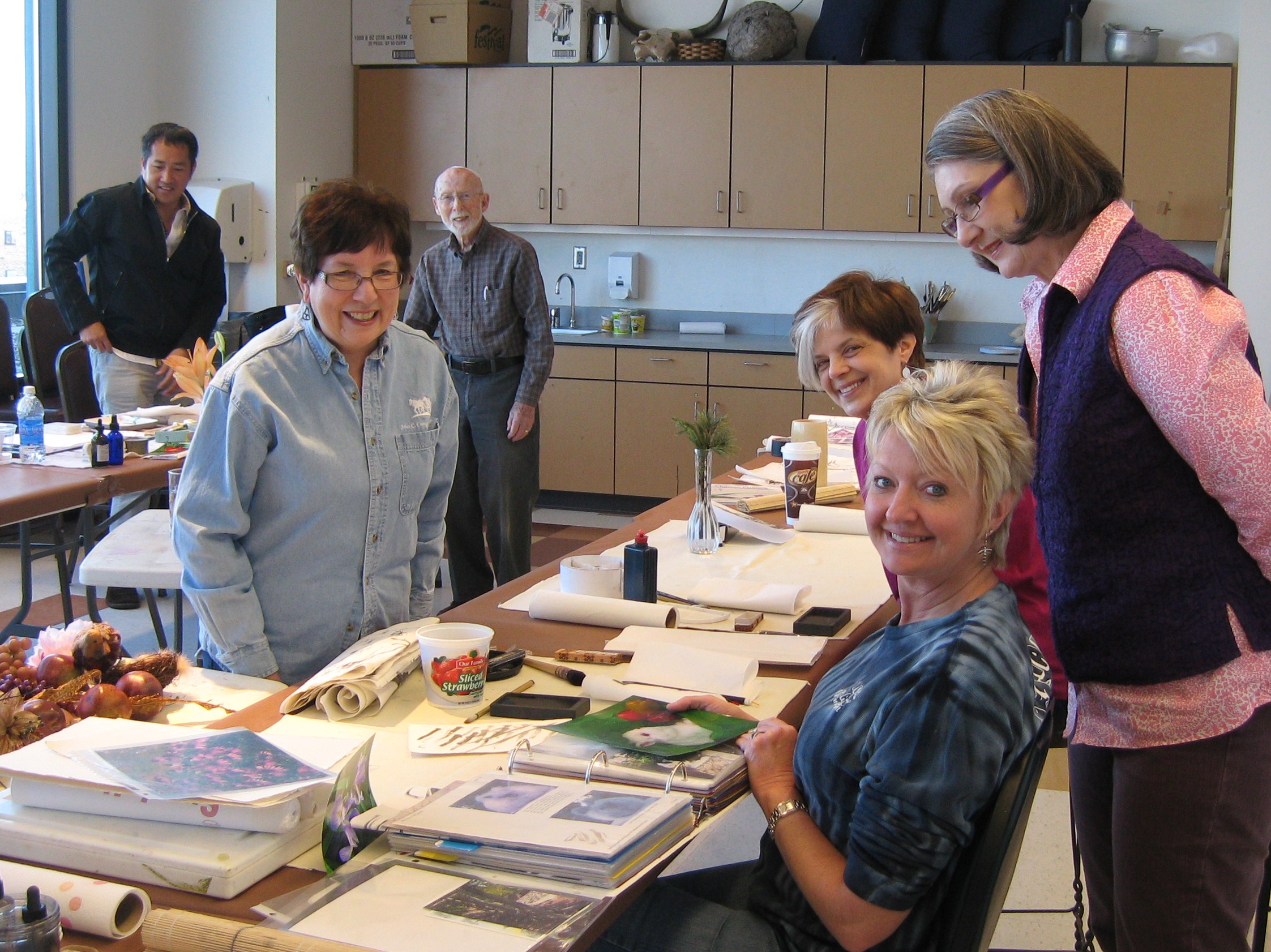
In the past year or two I have been digging into my artistic side by taking watercolor classes. Last fall, I signed up for a workshop called “Sumi and Soul” by Yuming Zhu, a professional artist who was born in China and currently lives in Seattle, Washington. I received so much from the experience that I signed up for another two-day workshop this spring with the same teacher.

Artist Yuming Zhu at Sumi painting workshop, 2011, Bloomington, MN--photo by Julie McCarty

Painting in the Chinese or Japanese way is quite different from the European style. In sumi painting, one holds the brush differently, and uses materials that more closely resemble ink and tissue paper than oils and canvas. Rather than painting with just your hand or arm, it is more as if your whole body is painting, from your own “center of gravity” someplace deep in your body. The philosophical or spiritual underpinnings are different as well, something the teacher mentioned in a gentle way, here and there, without harping or preaching.

Julie trying out Sumi painting at Yuming Zhu's workshop at the Bloomington Art Center in Minnesota--2011

My experience of the workshops with Yuming was very positive. As a writer, I am often too tense or perfectionist, which blocks the flow of words onto the paper. The Sumi workshop helped me to view my writing in a different way, to open up myself to letting the creativity flow more freely without fear of making “mistakes.” This fear is a real block to creativity, and “Mary Francis” (what I call the “good little Catholic girl” inside me) needs to let go of these fears.

 One of the many things I learned about in this workshop was the Chinese concept of chi, a word that means something like “energy” or “life force” in English. Here’s what About.com says about chi:

Ch’i (also spelled Chi or Qi) is a fundamental concept in Chinese philosophy and culture. Found in Chinese traditional religion but especially Taoism, Ch’i literally means “air” or “breath,” but as a concept it refers to the energy flow or life force that is said to pervade all things. (Read more here or also here.)

On the second day of Yuming Zhu's workshop, students arrived with energy--photo by Julie McCarty, 2011

The concept of chi intrigues me. Because I follow Christ, the idea of chi made me think of the Holy Spirit. God’s Spirit moves, creates, and breathes in us. In fact, in the original bible languages, the word “spirit” is the same is the word “breath.” It was “spirit” that God “breathed” into the first human in one biblical Creation story.

 
Too often, Christians think of God as rigid, stable, unchanging–and I’m sure there is certainly the element of stability and permanence in the best sense in the Divine Being we Westerners call “God.” I don’t deny that truth. However, on the other hand, the Spirit is called Creator Spiritus, the divine Spirit that Genesis tells us “hovered over the waters” during the creation of the cosmos. This Spirit of God is alive, dynamic, moving, active. Jesus compared the Spirit to the wind: you do not see it, or where it is going, but you know it it there.
Yuming Zhu's painting demo, Bloomington Art Center workshop, Spring, 2011--photo by Julie McCarty
I wonder what would happen if Christians of today took Creator Spirit seriously, that person of God known for movement, action, creativity, and breath. Would the Creative Spirit bring about something new? Something beautiful? Something prophetic, that is revealing truth and compassion?

I wonder, dear reader, what good things might the chi within you or me, our inner energy, want to create today? What newness of life might the Spirit of God want us to bring to birth this week, this year? How might we live the Resurrection of Christ, that image of energy, bursting out of the tomb, right here, right now in this moment?

Note: To view artwork by Yuming Zhu or find workshops, visit his website http://www.yumingfineart.com/about.htm  or on Facebook, http://www.facebook.com/mypainting

God as Mother? Famous Christians who compared the two

About five years ago, I wrote a 3-part series about the names of God that appeared in several Catholic diocesan newspapers. Part one explored the many names we have for  God and part three pondered how God is also “beyond all names” because no words adequately describe the fullness of the Divine.

Because Mother’s Day is approaching, I’m revisiting  part two of the series, “Is it permissible to call God ‘Mother’?” The response to this article was the most intense reaction I ever received from a single article, ranging from enthusiastically grateful to the anonymous person who wrote to tell me I should give up writing and “go back to the kitchen.”

Many Christians across the internet have written both for and against the idea of comparing God to a loving mother. Some say that because Jesus called “Father” that we must not ever call God “Mother.” I think this is a weak argument for at least two reasons. Jesus himself was going outside the norm by calling God “Abba,” a name that really is more like the English “Daddy” or “Papa” than the more formal English word “Father.” Why is it we don’t call God “Daddy” if we are so set on following what Jesus said to do? Secondly, if we only do things that Jesus gave us permission to do, then we had better not use altar servers, pipe organs, or English versions of the bible, or even Latin ones for that matter, because after all, he didn’t tell us we could do that.

Some theological types will tell you it’s okay to compare God’s attributes to some motherly qualities, but that it’s not permissible to call God “Mother” by name. I understand the distinction (barely), but I don’t really see what difference this theological hairsplitting makes for one’s personal prayer life.

We all know that comparisons aren’t perfect matches. Mothers aren’t perfect people–but neither are fathers, but we still call God “Father.”  But we can observe the ways that God is like a good, loving earthly father and like a good, loving earthly mother.

In honor of Mother’s Day, I thought it might be good to pull out the resources I used for that original article about comparing God to a loving mother. Here are what some famous Christians and biblical authors saw. It’s funny how many of these writers were men comparing God to a mother.

Some bible imagery comparing God to a mother 

Although the bible usually speaks of God using masculine imagery, there are indeed some maternal images used as well, as Virginia Ramey Mollenkott details in her book, The Divine Feminine: The Biblical Imagery of God as Female (Crossroad). In Isaiah, God says (about God’s self), “Can a mother forget her infant, be without tenderness for the child of her womb? Even should she forget, I will never forget you” (Isaiah 49:15). In a prayer of desperation, Moses uses similar womb imagery, speaking of God as one who gives birth, asking God, “Was it I who conceived all this people? or was it I who gave them birth…?” (Numbers 11:12). Hosea describes God as a mother bear, attacking those who steal her cubs (13:8) Jesus compares himself to a mother hen who longs to gather her chicks together under her wings (Matt. 23:37).

From church history

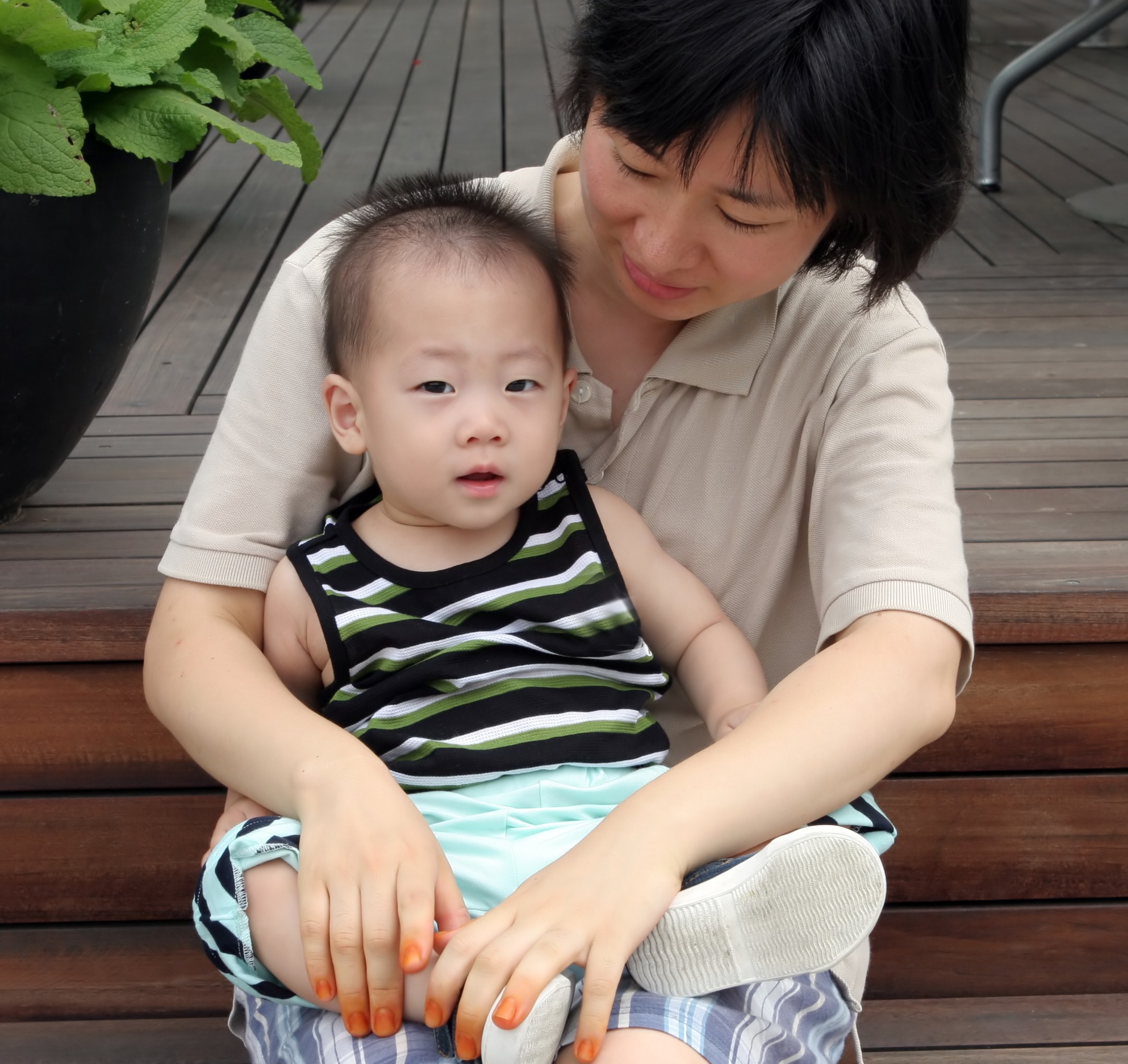
Christian saints, theologians, and spiritual writers have sometimes described God in maternal terms. St. Augustine observes that just as a mother’s body transforms ordinary table food–too complex for a baby’s delicate digestive system–into milk that is tailored to the baby’s needs, so does the Lord convert Wisdom into “milk” appropriate for our limited understanding. Another early church father, Clement of Alexandria, devotes an entire chapter to this mysterious process of mother’s blood becoming milk, musing over the various ways this connects to the spiriutal world. In one example, he views Christ as the nourishment that flows from the “Father’s breast,” feeding us with the milk of love. St. John Chrysostom writes of Christ as a mother who does not farm her babies out to a wet nurse but rather feeds them personally and tenderly.

“As truly as God is our Father, so truly is God our Mother,” wrote 14th-century mystic Julian of Norwich. “To the property of motherhood belong nature, love, wisdom, and knowledge, and this is God. . . The mother can give her child a suck of milk but our precious Mother Jesus can feed us with himself and does. . .” (I think she was speaking of the Eucharist here?)

St. Catherine of Siena, whom the Roman Church calls “Doctor of the Church” for her wisdom, compared Christ’s sacrifice on the cross to a mother who takes a bitter medicine so her nursing baby can get well again. Another “Doctor of the Church,” St. Teresa of Avila, compares quiet, contemplative prayer to breast feeding because God nourishes the soul without the need for words.

In recent decades

One can find many people writing about God as Mother on the web, but at the moment, I’d like to look at a couple of famous Catholic leaders. In 1978, during his brief pontificate, Pope John Paul I noted that “we are the objects of undying love on the part of God. . . God is our father; even more God is our mother.” His successor, Pope John Paul II (now Blessed John Paul II), wrote that the loving hands of God are “like those of a mother who accepts, nurtures and takes care of her child” (in Evangelium Vitae, no. 39). In Dives in Misericordia, he compares God’s love to a mother who cares for her children, even if they become “lost sheep” (no. 15). Even the Catholic Catechism of our own time reminds us that “God’s parental tenderness can also be expressed by the image of motherhood, which emphasizes God’s immanence, the intimacy between Creator and creature” (no. 239).

Motherhood, of course, includes a good deal more than just the birthing and feeding imagery in many of the examples above. Even so, it’s a start–and a good thing to ponder this Mother’s Day. Thank you, Mother God, for giving us life!

Until next time, Amen!

Spiritual Aerobics: 1. Make a list of the good qualities of your parents. Which ones are also found in God?

2. Have you ever imagined God as having positive qualities often associated with women? Why or Why not?


Special offer: Win a Daily Prayer Book

Spread the word:

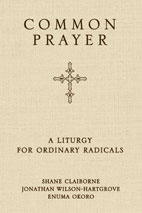
Win a free book called Common Prayer: A Liturgy for Ordinary Radicals, a modern, multi-denominational Christian daily morning & evening prayer book with Scripture readings, songs, psalms, prayers for various occasions, reflections on the liturgical seasons, and short readings from or about traditional saints and people of the modern era, such as Jean Vanier, Howard Thurman, G.K. Chesterton, Rabbi Abraham Joshua Heschel, Oscar Romero, Dorothy Day, and Catherine de Hueck Doherty. (Hardbound, 590 pages, $24.99 retail value.)

How to win: Be the 10th person… If you are not already receiving the Spiritual Drawing Board (this blog) in your email each week, simply enter your e-mail address in the e-mail subscription box at the right, confirm your subscription with WordPress when the confirmation e-mail arrives, and the 10th person to sign up from the time I post this message will receive this book, Common Prayer, free… read on for details…

Fine print: Winner must not have previously signed up to receive this blog in his/her email, and must live in the United States (due to mailing costs and legal matters), and must supply his or her true name, address, and phone number at the time of winning so that the book may be mailed. Those under the age of 18 are allowed to sign up and win if their parents give them permission. One e-mail address per person. Sorry, relatives of Terry McCarty and Julie McCarty are not allowed to win (but you can sign up to receive the blog posts). Offer void where prohibited by law.

[Added later: Contest deadline: June 30, 2011.]

Don’t worry: I do not give out e-mails to businesses or others.

Good luck! Tell your friends & family, your minister, and your parish staff about the free spiritual reflections at the Spiritual Drawing Board… and, as Jesus said, Peace be with you

Jesus said, “Peace be with you.”

When it was evening on that day, the first day of the week, and the doors of the house where the disciples had met were locked for fear of the Jews [the leaders who handed Jesus over to the Romans] , Jesus came and stood among them and said, “Peace be with you.” (John 20:19)

After Jesus was crucified, his disciples were in hiding, afraid of what might happen next. If Jesus, their beloved rabbi and leader, the one with all those miraculous spiritual powers, had been tortured and killed, it could happen to them.  

I imagine they were confused, crushed with disappointment, and experiencing the intense emotions of grieving. How could this happen? All those miracles, their belief in Jesus as the Messiah, the Anointed one of God–all that goodness destroyed by the Romans who put him to death! And their own religious leaders, who had also condemned Jesus of blasphemy. Would they also turn on Jesus’ disciples?

Surely they had feelings of remorse and guilt. After all, they had run away when their friend needed them most. They had given in to fear, even though their Lord had told them repeatedly, “Do not be afraid.” What kind of followers were they, insisting to Jesus’ face that they would stand by him, even to the death, and then, instead, immediately fleeing when the going got tough? Peter, “first among equals” or the “prime” apostle, even lied when questioned about his association with Jesus.

When the Risen Lord appears to this disloyal group for the first time after his death, what does he say? If he were a married person, talking to his or her spouse, he might have said, “Told you so! I knew you would leave me when things got rough.”

If Jesus were a politician, he might have fired the disciples from their managerial posts. If Jesus were like certain religious leaders, he might have assigned the apostles a penance, banned them from teaching, or withheld communion. After all, most the apostles abandoned Jesus after he was arrested. (We only hear of John, Jesus’ mother, and other women followers standing by Jesus as he suffered on the cross.)

But the Lord Jesus is not like us sinners. He is not self-centered or self-righteous. In relationships, Jesus does not grab at power over others. He has no need to be a superstar, dictator, or spiritual bully.

When he reappears to them after his death, the first words Jesus says to them are “Peace be with you.” This peace is the inner peace that only God can give. It is not a peace based on owning a lot of material possessions, being wealthy, having a sexy appearance, belonging to the winning political group, or even forming the perfect liturgical translation. Christ’s peace is a gift of the Spirit, given freely with love.

The peace that Christ is offered them–and offers us–is not only peace within each soul, but also peace among people, creating spiritual networks of loving relationships. The Greek word in this passage of John’s gospel is not merely about the absence of disturbance or conflict. It is a word that probably is from the root word that means “to join.” Christ desires that we be joined together in relationships of love. The peace Christ wants is one of harmony among people, which is what he prayed for just prior to his death, that all may be one, not one in physical appearance, worship style, culture, or dogma, but one in the Spirit, one in the Lord.

When Christ wishes the disciples peace, he is offering it to them without strings  attached. The Risen Lord loves all people, sinners or so-called religious. If we would be his followers, we must do the same.

Until next time, Amen!


Note: Many thanks to my hubby, Terry McCarty, for the photographs in this post. He took them this past month at the Como Park Conservatory in Saint Paul, Minnesota. Copyright 2011, Terry McCarty. All rights reserved.