The Jesus Prayer

“Jesus Christ, Son of God, have mercy on me, a sinner.”

As I mentioned last time, I’m  involved in a small faith group this summer which is exploring various ways to pray. We are using the book Creating a Life with God: The Call of Ancient Prayer Practices by Daniel Wolpert (Upper Room Books).

"Christ the Pantocrator--Jesus Creator of All" --Icon by Marian Zidaru 2002--photo by JAMThis week I finished reading the chapter that focuses on the Jesus Prayer.  This ancient way of praying reminds us of God’s presence through praying the words the blind man shouted out to Jesus as he passed by: “Jesus, Son of David, have mercy on me!” (Mark 10:47)

The exact wording of this prayer can vary. Some pray, “Jesus, Son of God, have mercy on me, a sinner” or other similar words. I once met a nun who simply prays two words in a slow, meditative fashion, sometimes in rhythm with her breath, “Jesus, mercy.”

This way of praying is not done in order to earn salvation or win God’s favor by repetitive prayer. The short prayer is used to draw one’s attention to God’s love, mercy, and presence in our lives, whether we are eating, sleeping, working, or sitting in church praying. Praying in this way draws our hearts and minds away from trivial, passing things, and into the realm of God’s presence, seeking to follow the instruction of First Thessalonians to “pray without ceasing” (5:17).

While reading Wolpert’s book, I was touched by the way he described praying the Jesus Prayer in the wee hours of the night:

One of the best times for me to pray the Jesus Prayer is at night when I cannot sleep. Rather than tossing and turning and getting upset that I am still awake, I simply begin to pray the Jesus Prayer. Remember that the pilgrim was told to pray the prayer even in his sleep! Often I do fall asleep right away. The times when sleep comes more slowly are wonderful periods of prayer. In the deep silence of the night, I can lift my heart and mind to my Creator—a soft voice ringing out into the infinite.

“Jesus Christ, Son of God, have mercy on me.” 

I, too, on occasion have prayed this prayer in the middle of the night. I like to do the short form, in time with gentle, slow breathing: “Jesus” (while gently inhaling) and “mercy” (while gently exhaling).  It’s like inhaling the presence of God and asking for God’s love and mercy all at once…mercy for my sins, mercy for the one who has hurt me, mercy for the sick and suffering, mercy for the broken and hurting world all around us.

If you think that this prayer practice is nothing but sweetness and light, think again: it is not always so. During an interview I did one time for an article on the Jesus Prayer, an Orthodox priest told me the this prayer form “is no picnic.” He explained that if one is serious about the Jesus Prayer, practicing it in the context of truly following Christ, Christ the Pantocrator -- Jesus Creator of All -- Detail --2002 Icon by Marian Zidaru -- photo by JAMthe prayer gradually leads a person to recognize his or her own impurities of word, thought, and deed that previously went unnoticed. This awareness of our own sins and imperfections leads us into a gradually deepening conversion process.

The Jesus Prayer, this priest observed, “is an effective tool in the very difficult work of gaining control of one’s mind in order to center it on the constant remembrance of divine beauty and awakening it to the eternal realities of the Spirit.” The process makes it possible for us to become “servants of divine Compassion, students of the Lord, studying how to die to ego, so that we might be reborn as children of the Spirit.”

“Jesus Christ, Son of God, have mercy on me, a sinner.”

Until next time, Amen!

Invitation: Contemplative Spiritual Practices Group

Sunrise beach walk--photo by Julie McCarty--click to enlarge

Every now and then, I find I have to do something to spice up my relationship with God. Like any relationship, God and I can get stuck in a rut, take things for granted, or let things go a little stale. Of course, it’s not really God who is letting things flounder, but rather I am the one who gets a little lazy or distracted.   (Sometimes the feeling of boredom or being stuck in a rut in prayer can really be God calling one to a deeper way of prayer—but that is the subject of another article.)

One way I hope to put a little pizazz into my prayer life this summer is by meeting with a small faith group to explore various contemplative spiritual practices. For six sessions, meeting every other week, we will be exploring different ways from the Christian tradition to pray and relate to God.

We will be meeting every other Wednesday beginning on June 29th, from 7:00 to 8:30 at a member’s home. Because of my background and training in this area, I will be facilitating the first few meetings. This group is part of the small group ministry at Easter Lutheran Church (ELCA) here in Eagan, Minnesota, but one does not have to be a member in order to join us. So you are welcome to attend if you are interested.

To begin with, the book we will be using is called Creating a Life with God: The Call of Ancient Prayer Practices by Daniel Wolpert. The author lives up in the area of Crookston, MN, and is a church pastor with many  credentials and experience in teaching Christian prayer. We’ll be looking at only 2 chapters per meeting so as to allow time between sessions to experiment with prayer on your own. The book is available from Amazon, Border’s, and Barnes and Noble for about $11. Local stores would probably order it for you. Topics include how to pray using short passages from Scripture, journaling, praying in nature, integrating prayer and life experience, finding God in silence, and other topics. The book is very helpful, but you do not have to obtain it before the first meeting.

Creating a Life with God explains how to pray with Scripture using the ancient Christian method called lectio divina (sacred reading), the Jesus Prayer, entering into silence and solitude, finding God in day-to-day experiences, journaling, the role of body in prayer, praying in nature, etc.  It looks at how various Christians of the past used these different ways to build their spiritual lives. You can read more about this book at the publisher’s site here  and a review of it here.

As I mentioned, if you live close enough to join us, we would love to have you come. Just contact me for more info and directions to our first meeting location at a member’s home. (Click on contact page above.)

And if you are interested but cannot attend, think about reading the book yourself. Feel free to send questions to be discussed on this blog if you like.

Until next time, God be with you,  Amen! 

Prayer book offer still good

Remember the special offer, back a few posts, about how to win a daily prayer book ? Weeelll, um, we do not yet have a winner, but we are getting closer. If you know anyone who might like this blog, please let them know they might win the book if they sign up for e-mail subscription.

DEADLINE is June 30, 2011. See May 4th post for details.

P.S. If we don’t have a winner by June 30, I’m going to award the book to whoever comes closest. 🙂  Look for an announcement of the winner in early July.

Mary, Mother of Jesus, the Married Contemplative

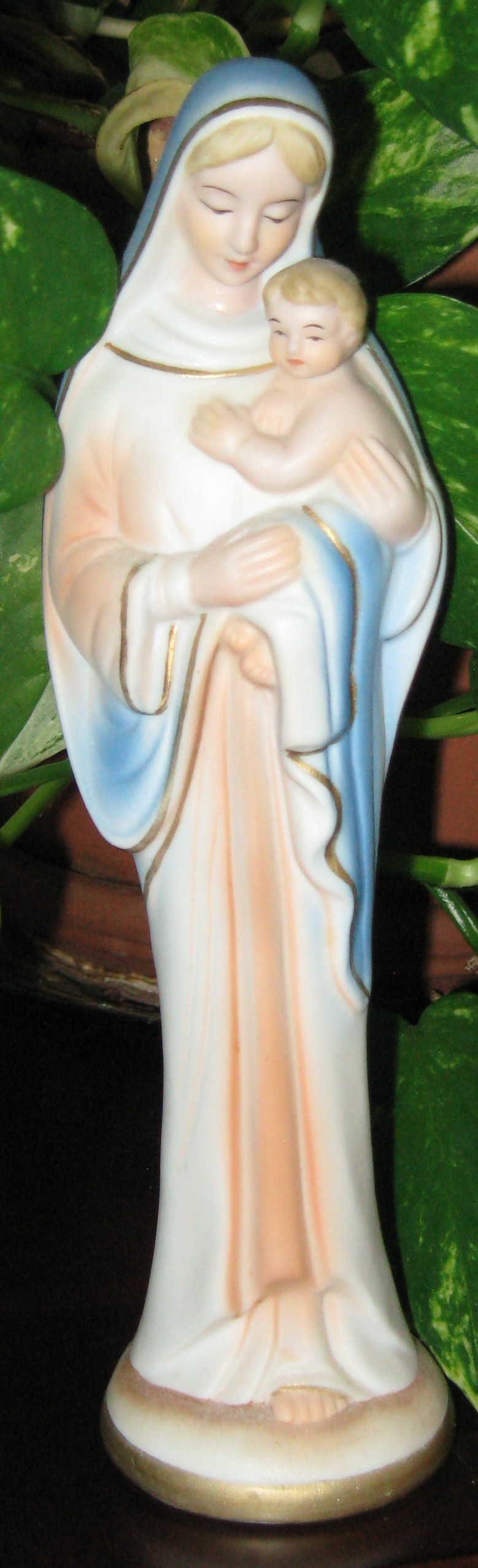
Some Christians think of the month of May as a time for honoring the life of Mary, the mother of Jesus, known also as “Mother of God” or the “Theotokos” (the God-Bearer). Where I live, May is the month when the earth comes to life again after the long Minnesota winter, and families celebrate Mother’s Day. Below is a spiritual reflection I wrote about Jesus’ mother, a short excerpt from a book I wrote.
 

And Mary kept all these things, reflecting on them in her heart. –Luke 2:19.

Was Mary a nun or a wife? Growing up Catholic, I associated Mary more with nuns than with married women. After all, she wore long, voluminous garments and a veil like that of the nuns who taught my religion class. Her statue was displayed clear across the church from that of Joseph; even in the manger scene they kept a respectful distance. Although I hadn’t a clue about the meaning of the phrase “ever virgin,” I clearly understood that Mary and Joseph were a special case.

The above Scripture verse (along with a similar one, Luke 2:51) is often used to represent the prayerful, contemplative side of Mary. She marvels at the surprise visit of the shepherds, who speak of heavenly beings revealing that her baby is the Messiah and Lord. Mary carefully stores the amazing details into the motherly scrapbook of her heart.

In the Bible, the “heart” is the hidden center of the entire person. In the heart one thinks, discerns, feels, hopes, reasons, and intuits. The heart is the inner space within, the place in which one encounters the Living God. When Mary ponders things in her heart, she is prayerfully mediating on the mystery of God acting in her life. Luke paints a picture, not of a stereotypical peasant woman, thought to be of no account, but of a woman who thinks, reasons, remembers, and meditates, trying to put all the pieces of her life together to make sense of God’s plan.

Because of this, Mary is sometimes called the contemplative par excellence. Yet, contrary to what we might subconsciously think, Mary was not a vowed nun. She experiences God’s presence while cooking for her family, nursing her baby, or stroking her husband’s hair as they drift off to sleep. She meditates while walking to the town well to fetch water and prays while baking bread or weaving fabric. Mary’s heart is open and pure, praying and acting in total communion with God at all times. In short, she is the married contemplative.

–Excerpt from The Pearl of Great Price: Gospel Wisdom for Christian Marriage by Julie McCarty (Liturgical Press), pages 28-29.

Spiritual Aerobics

For journaling or small group discussion 

1. How do I think of prayer and the life of married couples, families, or other laypersons? Is deep holiness and prayer only for those viewed as the “professional religious” (priests, ministers, parish staff, nuns, etc.)? Is that what Jesus taught in the gospel?

2. Get creative: How would you portray Jesus’ mother in drawing, collage, paint, clay, or other art form? You don’t have to be an artist. How do you imagine her daily life? How did she pray when the angel Gabriel wasn’t visibly present?

3. Is every Christian or every human called to be contemplative? Just what does that word “contemplative” mean to you, and what might it mean for the future of Christianity?

Special offer: Win a Daily Prayer Book

Spread the word:

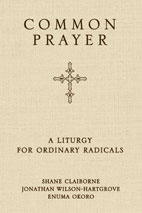
Win a free book called Common Prayer: A Liturgy for Ordinary Radicals, a modern, multi-denominational Christian daily morning & evening prayer book with Scripture readings, songs, psalms, prayers for various occasions, reflections on the liturgical seasons, and short readings from or about traditional saints and people of the modern era, such as Jean Vanier, Howard Thurman, G.K. Chesterton, Rabbi Abraham Joshua Heschel, Oscar Romero, Dorothy Day, and Catherine de Hueck Doherty. (Hardbound, 590 pages, $24.99 retail value.)

How to win: Be the 10th person… If you are not already receiving the Spiritual Drawing Board (this blog) in your email each week, simply enter your e-mail address in the e-mail subscription box at the right, confirm your subscription with WordPress when the confirmation e-mail arrives, and the 10th person to sign up from the time I post this message will receive this book, Common Prayer, free… read on for details…

Fine print: Winner must not have previously signed up to receive this blog in his/her email, and must live in the United States (due to mailing costs and legal matters), and must supply his or her true name, address, and phone number at the time of winning so that the book may be mailed. Those under the age of 18 are allowed to sign up and win if their parents give them permission. One e-mail address per person. Sorry, relatives of Terry McCarty and Julie McCarty are not allowed to win (but you can sign up to receive the blog posts). Offer void where prohibited by law.

[Added later: Contest deadline: June 30, 2011.]

Don’t worry: I do not give out e-mails to businesses or others.

Good luck! Tell your friends & family, your minister, and your parish staff about the free spiritual reflections at the Spiritual Drawing Board… and, as Jesus said, Peace be with you

Holy Week: Meditating on Marc Chagall’s White Crucifixion

White Crucifixion–1938 oil painting by Marc Chagall (click on picture to enlarge)   (more details at end of post) 


 As you probably know, this week is the celebration of Jewish Passover and Christian Holy Week. Because of this, I wanted to do something special, so I hunted online for a work of art to use for visio divina (meditating with art, see Feb. 24, 2011 post). As a Christian, I was looking for an image of Christ on the cross, and ended up being drawn to a 20th century painting called White Crucifixion by the famous Russian and Jewish artist Marc Chagall.

People have highly individualized reactions to art and I want to state up front that this post is not a historic analysis, an art critic’s review, or even a theological examination of the White Crucifixion. This post is simply my own personal feelings, thoughts, and prayer reactions after spending several days pondering the work. I respect that there are many ways to view the White Crucifixion, and I believe the artist himself would be the first to acknowledge that.

Many of Chagall’s paintings could be described as lively, romantic, humorous, imaginative, and filled with brilliant colors, but the White Crucifixion is largely drained of color. Chagall painted it in 1938 while living in Paris, in response to the horrifying events of Kristallnacht,  the “Night of Broken Glass,” when Jewish homes, businesses, and synagogues throughout Germany were systematically vandalized or destroyed, and thousands of Jewish men were carted off to concentration camps.

In White Crucifixion, Chagall arranges various scenes of this Jewish suffering around the crucifix, much like an altar screen adorned with biblical scenes around the perimeter. In the upper left, Russian soldiers turn Jewish homes upside down and set them ablaze. In the upper right, Nazi soldiers throw sacred objects from a burning synagogue out into the streets.

Below, a Jewish man is fleeing with a bag of belongings on his back, while another stands ready to sprint away, the sacred Torah firmly clasped in his arms. A woman holds her child in a protective stance; an old bearded man stands with a sign around his neck, his hands open, as if to ask “Why?”; refugees on an overloaded boat look as if about to die of hunger; a sacred scroll in the lower left corner is rolling on the ground, about to disappear from our sight; and the ghosts of Jewish rabbis and ancestors float above the scene, some covering their eyes or looking away—the sight is too horrendous to behold.

In the middle of all this, a Jewish man hangs on a cross, his only clothes a simple head covering and a tallith, a Jewish prayer shawl, to hide his nakedness. The words above him identify him as “King of the Jews.” With his hands and feet nailed to the cross he cannot move to stop the chaos and suffering all around him. He, too, suffers with all those others suffering. He bows his head in silence, as if in prayer or mourning. A light shines from above, while silent candles (a menorah turned sideways?) hold vigil at the base of the cross.

If the picture makes you feel uncomfortable, as it did me, I suggest you stay with that feeling for awhile. I did. I pondered the many evil things people have done, supposedly in the name of Christianity or other religions. I thought of all the times we think of Jesus as a blue-eyed, blond-haired little baby in a manger and how wrong it is that so often Christians have stripped Jesus of his Jewish heritage—and, much worse, committed heinous crimes against his younger, modern-day nieces and nephews.

The White Crucifixion reminds me that the observance of Good Friday ought not only to be about remembering the sacrifice of Christ, but also of the suffering that is going on all around the world today. Even as you read this, someone somewhere is being tortured, unjustly imprisoned, raped, kidnapped, enslaved, or murdered. Do we pray for these unseen, silent victims?

This Good Friday, let those of us who dare to call ourselves Christians take a good hard look at how we treat people who are seemingly “different.” Let us meditate long on the words Jesus said: “. . . love your enemies, do good to those who hate you. . .” (Luke 6:27) May we respect life in all its forms, treating every human with the same dignity we would treat Christ.  After all, it was Jesus who said [in the words of the song based on Matt. 25:40], “Whatsoever you do to the least of my brothers, that you do unto me.”


Notes:  Image of the painting above was copied from Wikipedia under the creative commons agreement. To view a larger image, visit the Art Institute of Chicago website, http://www.artic.edu/aic/collections/artwork/59426.

Other resources consulted: Marc Chagall and the Lost Jewish World by Benjamin Harshav (Rizzoli); Chagall by Jacob Baal-Teshuva (Taschen); and Marc Chagall by Jonathon Wilson (Nextbook-Schoken).

Behind the Boss’ Back: Prayer in the Workplace

Pray during the workday without disturbing others

Is there a way to pray in the workplace, without neglecting your job or infringing on the rights of others? A way to keep in touch with God while running a grocery store checkout, managing a daycare, answering phones, or meeting with clients? Or is prayer something restricted to that little Sunday box on your calendar?

A lot depends on how you define prayer. Praying the rosary while interviewing a new hire or meditating in a lotus position while running a backhoe certainly won’t work. Your boss won’t be a happy camper if you tell him or her that you missed a critical staff meeting because you were in a deep mystical ecstasy.

I suspect that few of us have ever thought about taking God with us to the workplace—but God is already there. After all, God is everywhere. Merely recalling God’s presence is itself one type of prayer. Simple? Yes, but difficult to remember to do. Here are some ways to prompt yourself to pray inwardly during your work day:

1. Place little reminders of God around your work area. If your office doesn’t allow religious symbols, use ordinary objects, like family photos, a personal book with a spiritual cover, or notes posted inside your briefcase to remind you of the spiritual dimension of your work, writes Gregory F. A. Pierce in  Spirituality at Work (Loyola Press). Writing a Scripture verse in your planner or selecting a gorgeous nature scene for your computer’s desktop wallpaper are other examples of unobtrusive ways to draw your heart to God without forcing your views on others.

2. Use your coffee break for a rendezvous with God. Reading little reflection booklets with lectionary readings or other devotions takes only a few minutes, but helps one enter into God’s presence.

3. Group with others for prayer time. In New York City, Muslims, committed to praying five times a day, meet in small groups during lunch or break times to recite the opening of the Koran and pray with bows, kneeling, and prostrations, writes Joseph Berger in the New York Times. He also reports that observant Jews similarly gather for minyan (prayer group of at least ten) in at least 180 places in busy Manhattan. People of other faiths might consider forming a small prayer group to meet at a nearby food court or coffee shop during a weekly lunch.

4. Set aside distracting thoughts. Just as you set aside distracting thoughts during prayer time, gently let go of distracting thoughts when a co-worker is speaking to you. Listen carefully to him or her—you might just hear the Spirit of God in something that is said.

5. Bring more silence into the work environment. God speaks to us in silence. You can invite a higher intelligence into your office meeting without saying it in so many words, suggests Dr. Deborah Savage, adjunct faculty of theology and business at the University of St. Thomas in St. Paul, Minnesota [now Clinical Faculty member at the Saint Paul Seminary at St. Thomas]. Prof. Savage says God’s grace is constantly present to us, but we need to slow down in order to notice it. For example, one business she heard about instituted a company-wide policy that allotted one specific hour each day for sacred work time: no meetings, no phoning, no interaction, just sitting at your desk to do your work.

6. Practice awareness of the present moment. Prof. Savage also observes that we often mistakenly imagine the soul as one little compartment of who we are, when really our soul is “larger” than our body and connects us to God. You can’t very well leave your soul at home when you drive to work in the morning—it’s the spiritual thread that runs through every moment of our lives, she says.

Prayer is really more about be-ing, than do-ing, Dr. Savage reminds us, so it’s good to practice being attune to everything in the present moment: our feelings, our sensory perceptions, our thoughts, etc. Everything we are actually exists within the presence of God. As chapter 17 of the Acts of the Apostles declares, in God “we live and move and have our being.” God is always with us—even in the busy workplace.

Note: This article is a slightly revised version of a column I wrote that appeared in several Catholic diocesan newspapers around the country a few years ago. It is reprinted here because it is one of the most requested articles on my author website.

Copyright 2011 — Julie McCarty, Eagan, Minnesota.

No Man Is an Island: Praying for Japan


Cherry blossoms
In Japan, cherry blossoms symbolize many things, including beauty and the transitory nature of life. (Click once or twice on the picture to enlarge it.) Photo by Radu Razvan Gheorghe--Dreamstime.com


As I write this, Japan is dealing with the aftermath of the recent earthquake/tsunami and experiencing the agonizing wait-and-see regarding damaged nuclear power plants. All the world watches and prays with them.

 As it so happened, just after the disaster hit on the other side of the world, I was reading a book that quoted this famous passage written by English poet John Donne (1572-1631):

 No man is an Iland, intire of it selfe; everyman is a peece of the Continent, a part of the maine; if a Clod bee washed away by the Sea, Europe is the lesse, as well as if a Promontorie were, as well as if a Mannor of thy friends or of thine own were; any mans death diminishes me, because I am involved in Mankinde; And therefore never send to know for who the bell tolls; It tolls for thee.

 This reflection is but a portion of Meditation XVII, found in Donne’s book called Devotions Upon Emergent Occasions, written while John Donne was confined to bed with a long illness. He would listen to the church bells calling people to gather for prayer. Sometimes the bells signaled a funeral–whose funeral might it be? Would the person who lay dying know the bells were calling people for a funeral? John Donne even wonders if perchance the bells are tolling for his own funeral, but is too sick to comprehend that the bells are for him.

 While pondering the meaning of the bells and the human condition, he comes to the awareness that we are all interconnected by the fact of our human nature. When one suffers, we all suffer. The suffering is not identical, of course, but when one suffers, we all feel the effects. When one rejoices, we can rejoice with them. We are not isolated, unfeeling robots, but rather members of the one human family.

 In Donne’s meditation, England is the “island” that appears separate from continental Europe, but is not really alone. When I read the passage the other day, I thought of the islands that form Japan, seemingly separate from the rest of Asia, but now, in our day, an important culture and piece of the bigger global community. Here is a more modern version of the passage:

 No man is an island, entire of itself; every man is a piece of the continent, a part of the main; if a clod be washed away by the sea, Europe is the less, as well as if a promontory were, as well as if a manor of thy friends or of thine own were; any man’s death diminishes me, because I am involved in mankind; and therefore never send to know for whom the bell tolls; it tolls for thee.

Today, we remember the people of Japan in our thoughts and prayers: O God, be with all those who suffer pain, grief, confusion, and the exhaustion of natural catastrophes. Guide and strengthen the arms of those who rescue and minister to the needs of others. Give us the courage to do what we can to support and comfort all those in need. Amen.


 Note: Reuters News Service has a list of relief agencies serving in the crisis in Japan. To view this list and donate, click here.

 Selected sources consulted for this post:

 Link to the source of cherry blossom photo:

 http://www.dreamstime.com/free-stock-photo-flower-net-rimagefree84837-resi1238037


Praying with “Migrant Mother” using Visio Divina

On the website Patheos, Presbyterian minister Tim Mooney writes about a prayer form called Visio Divina, a way of praying with sacred art or other images. Visio divina (“divine seeing”) models itself after lectio divina (“divine reading”), that time-honored Christian way of thoughtfully meditating on Scripture. (Read more about visio divina here.)

 Artwork and religious symbols often draw me into a quiet, reflective zone, so I decided to give visio divina a try and share my experience here at the Spiritual Drawing Board. Just so I wouldn’t have too many preconceived ideas, I looked for an image not usually found in churches, and decided upon Dorothea Lange’s 1936 photograph called “Migrant Mother.”

 Experiencing Visio Divina

As the article on visio divina recommended, I set aside 20-30 minutes for the process. After asking the Holy Spirit to guide my prayer, I spent a little time just observing the various parts of the picture:

  • The woman’s sleeve is tattered. She has no make-up and there are wrinkles near her eyes.
  • Why do the children hide their faces? Are they ashamed to be seen?
  • The baby on her lap is wrapped in an oversize garment and has dirt on his or her face.

 The woman looks to be 40-something, but I know from my reading that her name is Florence Owens Thompson, 32, married mother of seven children. In this photo, taken during the Great Depression, she is sitting in a three-sided lean-to canvas tent. (View other pictures taken that day here. )

These facts make me think about the economy of today and people who suffer around the world, especially the homeless, many of whom are children. I imagine the faces of other migrant women of various races and ethnicities. Would I feel the same empathy for each of them as I feel for the woman in the picture?

 After praying for the grace to love all people with equal intensity, I focus my attention back on the picture once again. The woman’s expression haunts me. She may be worried, but she is determined. I think she is going to do whatever it takes to feed her children. With her hand placed under her chin, she reminds me of Rodin’s bronze sculpture The Thinker. Yes, I decide, she is indeed a strong woman, a brave woman, dead set on caring for her hungry children.

 I wonder, did Mary, the mother of Jesus, ever look so strong and determined? She, too, was a “migrant mother,” on the move with Joseph, first traveling as a pregnant woman to Bethlehem, then fleeing to Egypt to save her child from death, and some years later to Nazareth. Did the Holy Family ever experience hunger pangs? Surely Mary must have felt this same fierce love and deep resolve to do whatever was necessary to care for her Child.  

 Why have I never seen this look of strength and determination on the face of Mary in statues or paintings? Wouldn’t Mary have been radically committed to do all in her power to fulfill God’s will? Wouldn’t her love of God have been strong? Are these characteristics of Mary portrayed in sacred art but I just didn’t notice?

 Come to think of it, wouldn’t God have the same type of parental concern for us? Could we imagine the Divine Face looking something like this woman, in terms of her strength and determination? Doesn’t God love us as much—no even more—than the very best of mothers?

Observing the Results

Sometimes we think of Scripture as comforting, but the Word of God also challenges us to become more like Christ. I think the prayer form visio divina has the same potential. After the above prayer time, I observed myself feeling less whiney about my own inconveniences and more grateful. I found myself intentionally smiling at people who look “different” from me. And, when writing this post, I recalled that the Hosea 13:8 compares God to a mother bear, who expresses fierceness if her cubs are threatened or taken away. 

Spiritual Aerobics –Try visio divina yourself, using whatever image or artwork you like. Many musuems have artwork available online. For visio divina directions, click here.

Making Choices: What’s the next step?

A journey of a thousand miles begins with a single step.
            Chinese Taoist philosopher Lao-Tzu
  

A number of years ago, while discussing an issue with my spiritual director, I suddenly burst out, “I wish God would just give me a recipe for my life.”           

To this, the saintly elder nun replied, “What kind of God would that be?”  

This answer caught me off guard, and since then I have pondered its meaning many times. Certainly God gives us various guidelines for the spiritual journey, but God also gives us the free will to choose the many ways in which we can express our love.  

Would I really wish that God decided everything for me? Wouldn’t that make me a puppet on a string or a computer that was just programmed to act in a predetermined manner?

 If one believes, with Saint John the Apostle, that God is love, or at least believes in living according to the ways of compassion, then it follows that we are given freedom in order to choose the many ways in which to express a healthy love for God, self, and one another.  

 What’s the next step? 

When I feel a little “stuck” in a project or indecisive about something, I consider a question I first heard about in a spiritual direction training course: What’s the next step?   

Retreat leader Pierre Wolff describes this method in his book Discernment: The Art of Choosing Well (Liguori, Revised edition, 2003, pages 27-30).  Focusing on just one step forward in love can help us keep from giving up a seemingly monumental project before we even begin. One step at a time also keeps us from expecting ourselves to have everything figured out and the decision completed within an unreasonable time frame.  

I also find that simply taking one simple step helps me keep from putting off something indefinitely. I can sort one pile of clutter rather than set myself up to clear out all the cobwebs of my house in a day (an unreasonable goal that is destined for failure). If I am feeling “stuck” in a writing project, I can ask myself, what is the one thing I could do today to move it along? If I’m experiencing a strained relationship, I can select one little way to reach out to the person with compassion.           

 A journey of a thousand miles. . .

“A journey of a thousand miles begins with a single step.” This wise saying is attributed to Lao-Tzu, a major spiritual figure in Taoism. (Some say that the saying originated with Confucius.)  

I believe that it is true that the little tasks we do, the little decisions to love, the day-to-day ways we treat each other, gradually add up to something tremendous, as Mother Teresa was fond of saying, “something beautiful for God.”

However, there is another meaning to this saying that is not readily apparent in the English translation. According to the website Quotationspage.com, the original Chinese proverb can also be translated into English in this way: “The journey of a thousand miles begins beneath one’s feet,” or “Even the longest journey must begin where you stand.” It is explained that this translation means that actions are best when they arise out of stillness.  

That means, when you are thinking about a choice, or doing some action, stop to think about it first. Take a walk alone to think it over, meditate, mull it over a bit in your journal, or spend some time praying about it. Listen to where the Spirit is moving in your heart.  

Hmmm… Isn’t that what Jesus did when he went out in the desert to pray, before beginning his public ministry, before selecting his ministry companions?  

Just for today, let us ask ourselves, with the attitude of compassion, what’s the next step?   

For reflection: What do you find helps you make good decisions?