Prayer Walking for Health of Body and Soul

“Don’t pray, just walk!” he said forcefully. I couldn’t believe my ears. This priest—this strict, traditional, and prayerful priest—was telling me not to pray? 

When I protested that as an elementary school teacher and married woman I didn’t have time for walking every day, this busy pastor described his own “morning constitutional” (rain or shine) and the many personal benefits he’d reaped from this daily ritual. 

My personal and professional life had reached an all time high in stress. I had, after all, asked his advice. So, I laid out my teaching supplies each night, changed my alarm clock setting, and stopped off at a large park each morning on the way to work.

The discipline of getting up earlier and dressing for the weather was a little challenging at first, but as the weeks passed, I began to look forward to this time of silence before being swarmed with energetic children each day. I delighted in the changing colors of the wildflowers, the squirrels and bluebirds that darted and danced before me, and the huge expanse of the ever-changing morning sky.

And, I confess, I began to pray. I remembered that my pastor had said not to pray. But, when I saw a fresh carpet of snow, sparkling in the sunshine, I couldn’t help but thank the God for the beauty of nature. As I walked, I sometimes mused over various challenges in my career, devising new strategies for teaching, and the next thing I realized, I’d be asking the Lord for help with a “difficult” student. Other times, I would feel a quiet, peaceful feeling of solitude with God. I just couldn’t help but pray!

As a busy mom and teacher, Janet Holm McHenry has discovered that combining prayer and walking provides additional space for her personal prayer time. In her book, “PrayerWalk” (WaterBrook Press, 2001), McHenry explains that, although she is not a “morning person,” prayerwalking in the early morning works well with her family’s schedule, provides the exercise she needs, and allows her time to pray without interruptions.

At first, McHenry prays for her family while she is walking. Later, her daily walks open her eyes to the needs of others outside her circle and she begins to pray for them as well. As the months pass, McHenry notices little changes taking place in herself that she attributes to prayerwalking. She gradually overcomes some of her fears. Her general mood and outlook on life improves, due to what she calls “spiritual endorphins.” One morning, her son even catches her singing while making school lunches.

In the magazine “Spiritual Life” (Spring 2002), Richard Hurzeler, a grandfather and retired college professor, also writes about the benefits of prayerwalking. Naturally he enjoys time with his family, but prayerwalking provides him with some quiet time while also stretching and toning his muscles. Hurzeler enjoys the change of scenery while looking and listening for the presence of God within himself and others. He reminds us of Mother Teresa’s words: “We should make every effort to walk in the presence of God, to seek God in all persons we meet, to live our prayers through the day.”

“Don’t pray, just walk!” When I think back to these words, spoken to me so many years ago, I wonder, was the priest using reverse psychology? Or was he opening me to new prayer forms? Or maybe both?


Note: Article above reprinted from the syndicated column “The Prayerful Heart” by Julie McCarty, which appeared in Catholic newspapers around the country a few years ago.
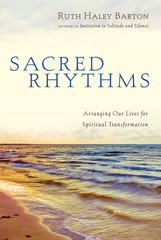
Coming soon to Easter Lutheran Church in Eagan: Sacred Rhythms

Sneak preview:

When Lent begins later this month, Easter Lutheran Church in Eagan, MN will be using the program Sacred Rhythms by Ruth Haley Barton. Based on gospel stories and ancient Christian practices, this program includes such topics as longing for more, praying with Scripture, making space for God, finding God in everyday experiences, and cultivating our own sacred rhythms.

“Sacred Rhythms” will be offered at various times beginning mid-Feb:

  • Wednesday afternoons  with Pastor Paul,
  • Sunday evenings with Pastors Kris, Kevin, & Sarah,
  • Monday evenings or Thursday mornings at Chick Talk women’s group with Julie McCarty (yep, that’s me). 

For details on exact times, dates, locations, visit easter.org (click on Lenten worship), or call the parish office,651-452-3680.

If you cannot attend, the Sacred Rhythms book, participant’s guide, and DVD make for great discussions in small groups or as springboard for Lenten journaling.  

More Info (FAQ’s):

  • Want to preview the sessions? Visit YouTube and search “ruth haley barton sacred rhythms.”
  • Which book do I buy? Easter Lutheran will be selling the main text for $15, or you can order from major booksellers online. If you are in a small group that hates reading, you could watch the DVD segments together and do the participant’s guides with your bibles.
  • What if I’m not a member at Easter, or not even Lutheran? Come anyway! All are welcome. No fee except for buying the book if you want.
  • What if I can’t make all the sessions? Slip into one of the other discussion groups that week, or just come whenever you can.
  • Can I bring a friend? Is it for both men and women? Yes! All are welcome! That includes interested teens, too. (Chick Talk, as the title suggests, is a women’s group…)

A Spiritual Word for the New Year

At the end of last year, I decided to try a spiritual practice suggested by writer Christine Valters Paintner’s on her blog, “Abbey of the Arts.” One selects a single word to ponder for an entire year. Perhaps it would be more accurate to say the word chooses you. As Christine explains:

In ancient times, wise men and women fled out into the desert to find a place where they could be fully present to God and to their own inner struggles at work within them. The desert became a place to enter into the refiner’s fire. . .   

 Many people followed these ammas and abbas, seeking their wisdom and guidance for a meaningful life. One tradition was to ask for a word – this word or phrase would be something on which to ponder for many days, weeks, months, sometimes a whole lifetime. This practice is connected to lectio divina, where we approach the sacred texts with the same request – “give me a word” we ask – something to nourish me, challenge me, a word I can wrestle with and grow into. —Abbey of the Arts, blog post of  Dec.21, 2011.

Christine embraced the word “savor” one year and “sanctuary” the next, exploring layers of meaning over the course of time. She invited others to post their special words for 2011, so I posted the word “consecrate” (to dedicate something for a special purpose).

Using a personal theme word for a year was so helpful, that I’m selecting another word for 2012. Here’s what I wrote about my word on Christine’s blog:

Co-create” — God, of course, is the Ultimate Creator, but each of us can cooperate with God’s grace to make the world a better place. I want to think about what it would mean to take seriously that God wants to lead me in my daily tasks, writing, painting, even cleaning house (something I hate) to “co-create” something positive, maybe even something graced and holy, something that maybe is a mirror of God’s love for us. Dare I dream of such a thing?

Other readers of Christine’s blog chose words such as “healing,” “birthing,” “welcoming,” “question,” “fallow,” and “loving kindness.”

Is the Spirit inviting you to ponder a word for the upcoming year? If you are not sure how to select a word, I suggest checking out the Abbey of the Arts blog of Dec. 21 for ideas. If you choose to post your special word,  you may qualify for a free gift from the site’s online “abbess.”

Until next time, Amen!

3-Minute Prayer Break–Say Yes by Bob Franke

The Advent/Christmas season is a blessed time for all, but sometimes it can be a painful time for those who experience separation from loved ones (as, for example, in time of war) or death of close friends or relatives.

When Mary said yes to the angel Gabriel (see last post), it was surely an exciting and joyous time, even if there was the terrifying side of being chosen as mother of the Son of God. It is right to celebrate the joyous event of the Incarnation, but sometimes we forget the high price Mary paid to follow through on her commitment to God.

In her obedience to God, Mary almost lost Joseph. Surely some people ridiculed her for having a child out-of-wedlock, perhaps even more so if she tried to explain about the angel’s involvement. Later, she and Joseph would face the labor of birthing in Bethlehem, away from familiar surroundings. They would have to flee as political refugees to a foreign land to save their child from death. One day, Mary would see her beloved child put to death on the cross.

Saying “yes” to God carries the great joy of new life and resurrection, but sometimes we Americans forget what Dietrich Bonhoeffer called the “cost of discipleship.” Following Christ is not always easy.  

Below is a 3-minute prayer break, a mini-time-out from the busyness of holiday preparations. The song “Say Yes” by Bob Franke (name rhymes with Yankee) reminds us to stay true to Christ even when the going gets tough. (Thanks to Barbara Keffer for sending it to me! And, of course, thanks to Bob Franke for such an inspiring song.)

If you are receiving this message via e-mail, the YouTube video may not appear. You can find it by visiting YouTube and typing in the search window these words: say yes by bob franke . It’s worth the effort.

May God grant you a peace-filled Christmas and bless you in 2012!

Until next time, Amen!

Happy Thanksgiving

O give thanks to the Lord, for he is good;
his steadfast love endures forever!
–Psalm 118:1 (NRSV)

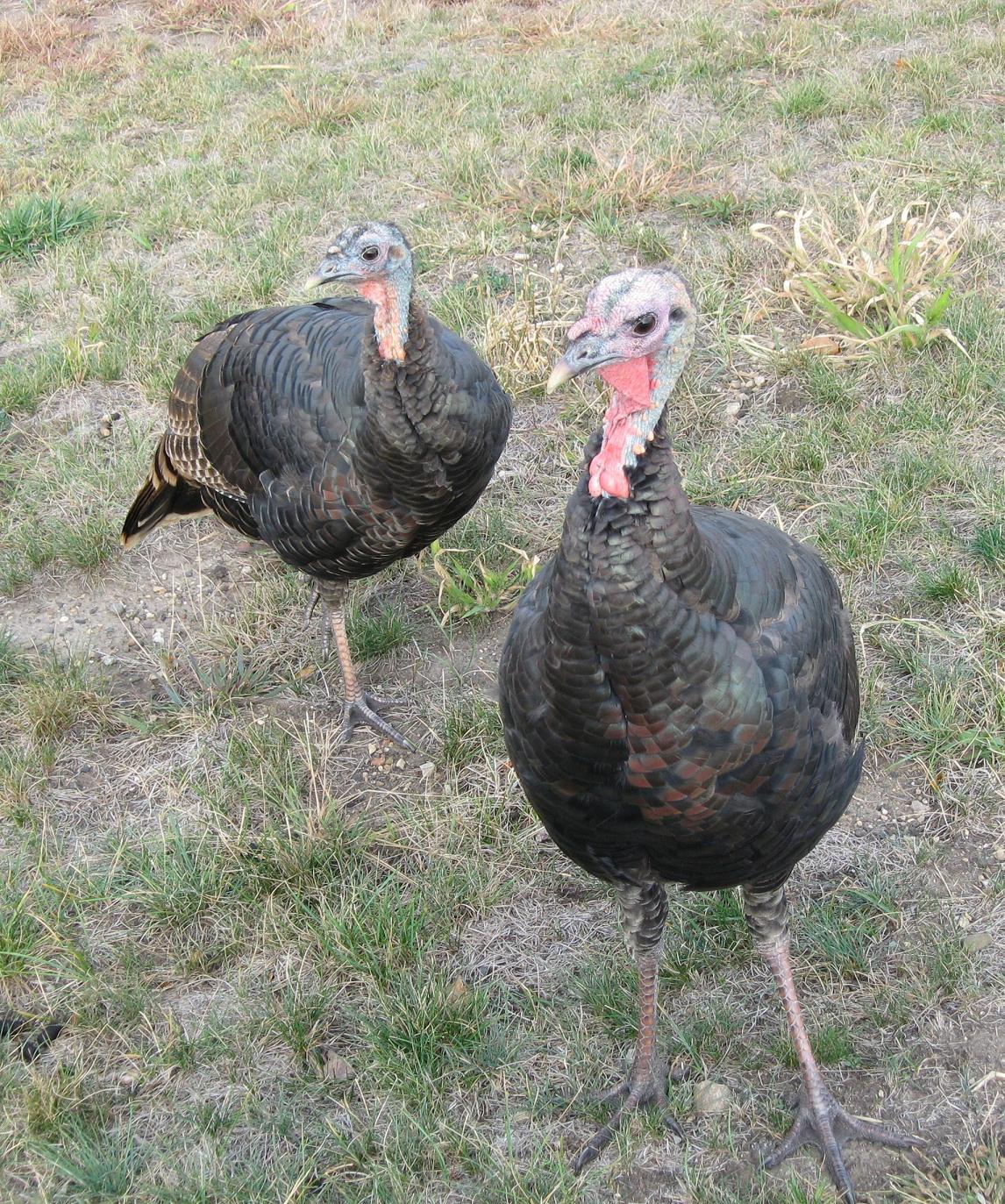
Wild turkeys in a nearby suburb--photo by Julie McCarty 2011

When I am feeling a little blue or worried in the middle of the night, I sometimes stop the negative thoughts by attempting to list 25 things for which I am grateful. The list can be wild or seemingly insignificant–whatever occurs to me at the time. I am thankful for a lush tomato from the garden, the color lavender, the scent of bread baking; for specific people/relationships in my life; for time alone with God and time together with others to celebrate. By the time I list 25 things, whatever was bothering me seems a less significant.

The above verse from Psalm 118 reminds me that one thing to be grateful for is the way God loves us no matter what. We sin, we hurt ourselves or others, we make mistakes–and yet, God’s love is ever-present, ever-faithful, ever-merciful.

In the original Hebrew of Psalm 118, the word for “steadfast love” is checed (pronounced  kheh’ – sed ). Checed or hesed, as it is sometimes written in English, is translated various ways depending upon the bible translation and the particular context of the bible verse. Sometimes it reads like this:

O give thanks to the Lord;  for [he is] good:
because his mercy [endureth] for ever.
–Psalm 118:1 (KJV–my underline)

Or, this:

Give thanks to the Lord,  for He is good:
For His lovingkindness is everlasting.
–Psalm 118:1 (NASB–my underline)

Checed can be translated all of these ways. God is good, and God’s faithful love, kindness, and mercy are all everlasting.*

Thanksgiving is a time of offering prayers of thanks for  many things. Most often, we thank God for the food on the table, a roof over our heads, our family and friends, our health, our jobs. These are all good prayers of thanks.

But the bible verse above makes me wonder: when have I ever thanked God for his love? Have I told God I appreciate his presence in my life? Have I expressed thanksgiving for the good Lord’s compassion, his kindness, his mercy and forgiveness?

Thank you, God, for your blessings this Thanksgiving–and thank you even more for the gift of Yourself, given to us through the sacraments, the Word of Scripture, the beauty of nature and other people, and your Spirit deep within our hearts.

Until next time, Blessed Thanksgiving!

* Note: Information on checed was found in the Blue Letter Bible online using the bible verse and Hebrew lexicon.

Also note: You can now print off these reflections, email them to others, Facebook or Twitter, using new features of WordPress at the Spiritual Drawing Board shown at the end of each post. (If you have trouble with printing using your server–as I did–try using Google Chrome or Mozilla Firefox servers.)


Elizabeth of Hungary: Patroness of “Juggling”

Rising very early before dawn, [Jesus] left and went off to a deserted place, where he prayed. (Mark 1:35)

St. Elizabeth–Spinning to make clothes for the poor–Marianne Stokes

In my Catholic upbringing, I got the impression that the only path to sainthood would be priesthood for men and religious life (becoming a nun) for women. I rarely heard about married women saints, and when I did, they were described to me as holy because of becoming nuns or founding convents after their husbands died.

Because of this, I have a special place in my heart for St. Elizabeth of Hungary, the medieval wife and mother who didn’t merely “tolerate” marriage (after all, the marriage was arranged by one’s parents) but rather genuinely liked her husband.

In her short lifespan of 24 years, Elizabeth integrated many callings: queen, wife, mother, woman of prayer, personal service to the poor and sick, etc. Elizabeth’s example appeals to people of many walks of life for many reasons, but I like to think of her as the patroness of “juggling:”

When I feel overwhelmed with balancing the pieces of my life, I think of St. Elizabeth of Hungary, the thirteenth-century queen who could be called “the patroness of juggling.” This young woman not only devoted herself to raising her children and spending time with her husband Ludwig (whom she adored), but she also attended church frequently, managed the castle while Ludwig was away on extended business, developed a rich prayer life, and personally ministered to the poor and sick of the kingdom (something the elite found rather revolting). 

Apparently Elizabeth couldn’t find enough prayer time to satisfy her, so she instructed her maid to sneak into the royal bedroom each night, reach under the bed covers, and pull on her toes to wake her. Elizabeth would slip away without disturbing Ludwig’s sleep to pray in secret. This clever plan worked well for a time, until one night, when the servant girl reached between the sheets, the king suddenly bolted upright in bed. Apparently she had found the wrong toes.

Jesus, too, often had to find ways of stealing away from his busy ministry to catch his breath. [In Mark 1:35-39], it appears that the disciples do not know where he has gone. When they find him, Peter sounds exasperated: “Where have you been? Everyone is looking for you!” It’s as if he thinks Jesus is missing a photo-op and the chance to work the crowd. But Jesus knows his priorities: his work must be grounded in a healthy, personal relationship with his heavenly Father.  

from The Pearl of Great Price: Gospel Wisdom for Christian Marriage (by yours truly, Julie McCarty; published by Liturgical Press)


When we feel pulled in many directions, unsure which task to do next, whether to say yes or no to this or that, or how much time to devote to prayer, we can take heart that others before us (including Jesus!) certainly faced similar human challenges–yet ultimately found their true Christian fulfillment.

St. Elizabeth of Hungary’s feast day is Nov. 17. For more about her read here  or view a slide show here .

Until next time, Amen! 

What is a Christian contemplative? Part One

Maple tree--photo by Julie McCarty--click to enlarge

Be still and know
that I am God. . .
             
–Psalm 46:10

For many years, I have been attempting to live a contemplative lifestyle that is often puzzling to others, even to professional church leaders. This way of life is grounded in my calling to follow Christ, but has often been difficult to explain in “sound bite” definitions, because this vocation does not fit easily into the Catholic or Protestant paradigms many of us were taught.

In addition, I can hardly begin to describe whatever-this-is that God desires for my life (at least I believe God wills this!), when the contemplative quest is so very difficult for me to grasp myself. So mysterious does all this seem that many times I have tried to keep this calling hidden, feeling others might not understand. (Many of you already know this about me–it is only I who think I need to “come out” of the contemplative closet!)

What I have discovered, ever so gradually over the course of my life, is that I am what could be called a Christian contemplative (also known in some circles as a lay contemplative, or, in my case, a married contemplative). A Christian contemplative is a person wholeheartedly attempting to follow Christ in a concrete way that emphasizes “be-ing” over “do-ing” in their day-to-day attitudes, work, and prayerful lifestyle. Although living “in the world,” a Christian contemplative focuses his or her life more intensely on spiritual values and practices that are often thought of as belonging to monks, such as silence, solitude, Christian meditation, biblical study, simplicity, and digging deep into one’s own soul, searching for the Holy Spirit or ongoing presence of Christ within.

This idea of living monastic values in the midst of the world is, in some ways, new, and in other ways, ancient. Many Western Christians assume a strict delineation between monastic living and those “in the world,” and, indeed there are significant differences between the two ways. For example, as a married lay woman, I am not celibate and I do not live in a monastery setting. On the other hand, monastic values, such as silence, almsgiving, humility, and treating others as brothers and sisters in Christ, are ancient practices found among biblical figures who were family men and women, living “in the world.”

Two books that really helped me understand this lay contemplative calling and how to begin to put it into practice are listed below:

  • The Lay Contemplative: Testimonies, Perspectives, Resources edited by Virginia Manss and Mary Frohlich with Foreword by Tilden Edwards (St. Anthony Messenger Press)
  • Ordinary People as Monks and Mystics by Marsha Sinetar (Paulist Press — I see there is a new edition of this since I last read it.)

I found these books unique because they describe the experiences of other people who are also searching for a quieter, more contemplative lifestyle outside monastery walls.

This is not to say that the contemplative lifestyle is necessarily “better” than those who are called to a more “active” service- or ministerial-oriented lifestyle. However, I think it would be good for those who lead the church to have a grasp on this often misunderstood Christian path. 

click to enlarge

If you feel drawn to a more contemplative lifestyle and would like to share your experiences, or perhaps just want to ask questions, join the conversation! Feel free to post your thoughts, or use the contact tab to write to me privately if you wish.

More to come on this topic in a future post…

Until next time, Amen! 

P.S. Yes, it is always okay with me to forward this post to your friends via e-mail. –Julie

Miracles Begin with Compassion

When Jesus went ashore, he saw a great crowd; and he had compassion for them and cured their sick. –Matthew 14:14

While listening to Pastor Kevin Olson’s sermon at Easter Lutheran Church this past Sunday, one sentence he said particularly struck me: “Every miracle begins with compassion.”

How different Jesus is from many public figures of our time–he did not work miracles merely to show his great spiritual power, create “special effects,” or convince others he was the Messiah. Jesus was not a politician trying to drive up his approval ratings or a celebrity seeking more media exposure.

Jesus was motivated by compassion. In Matthew 14, the passage read on Sunday, Jesus has just heard about the death of his cousin John the Baptist. He responds by going off to a deserted spot to pray, and, I imagine, have a little downtime to grieve.

But people want to see Jesus so much that they go out of their way to find him. When his prayer time is interrupted, Jesus doesn’t rebuke them or send them away. Out of love, he sets aside his own agenda and calmly responds to their needs.

This is one way that Jesus and I differ. When I am interrupted in my work or prayer, I don’t always respond that well. Pastor Kevin reminded us that spiritual writer Henri Nouwen pointed out that our true mission is sometimes found in the interruptions themselves. Our real ministry is not only in the “work” we do, but in the midst of people who come our way and “interrupt” us.

Jesus’ compassion doesn’t end at the end of the work shift, either. After a long day of interacting with the crowd, which has now grown to 5,000 (not counting the women and children), the disciples remind Jesus it’s getting late and no one has eaten. They suggest Jesus punch out for the day by telling the people to go to the nearby village to get something to eat.

But Jesus’ compassion for others is so great that he doesn’t want to risk people not getting fed due to lack of money or lack of resources (would a village really have enough food for thousands of people without advance notice?). So he tells the disciples:

You give them something to eat.

The disciples, of course, objected to this impractical—no, make that completely unreasonable—idea. They have some concern for the crowd’s needs, but this idea of feeding the crowd themselves seems ridiculous.

Nevertheless, Jesus asks the disciples to bring him what they have, the now-famous five loaves and two fish. Jesus blesses it and the disciples begin to offer it to others, and, as you know, the food in some miraculous way multiplies to feed them all.

I know I am like those disciples. I sometimes see other people’s needs and feel compassion but stop short of doing anything. I want to help them, but like the disciples, part of me wants to send the suffering away to get help someplace else.

There are many people suffering in our world today who need our compassion. There are those who are unemployed or under-employed, the sick and starving, the battered and war-torn, and the list goes on and on. Each of us, by ourselves, cannot undo all the problems of the world, nor does God expect us to do so.

However, too often we use the vastness of the problems to keep us from doing anything at all. Like Jesus’ disciples who wanted to send the hungry crowd away to fend for themselves, we want to send the suffering away—let someone else deal with the problem.

But Jesus didn’t send people away empty. He filled their lives with healing, love, meaning, and yes, food for their bodies. Through the words of Scripture, Jesus tells us again today:

You give them something to eat.

 Until next time, Amen!

Spiritual Aerobics

The word “compassion” comes from roots that mean to stand with someone in their suffering. The compassionate person is willing to journey with another who is experiencing pain, agony, confusion, or other trials. Who do you know that is suffering these days? How would Jesus express compassion for this person? Is there something you could do for him or her?

Prayer of Saint Francis

In our broken and hurting world, the Prayer of Saint Francis of Assisi reminds me what is really important in life. The words of the prayer have the attitude and mind of Christ, who did not seek fame or glory, but rather sought to love and serve others.

The Prayer of Saint Francis:

Lord, make me an instrument of your peace.
Where there is hatred, let me sow love.
Where there is injury, pardon.
Where there is doubt, faith.
Where there is despair, hope.
Where there is darkness, light.
Where there is sadness, joy.
 
O Divine Master,
grant that I may not so much seek to be consoled, as to console;
to be understood, as to understand;
to be loved, as to love.
For it is in giving that we receive.
It is in pardoning that we are pardoned,
and it is in dying that we are born to Eternal Life.
Amen.
 
There is a beautiful visual mediation of this prayer on YouTube using the music of Christian musician John Michael Talbot (video by heywaldojr). The photos that accompany this 4 minute song make a wonderful prayer meditation, a good break from the work of the day (if commercials appear, just click on the X to get rid of them):
 
If you cannot see the above video, click on the following link or copy and paste the link into your browser:

http://www.youtube.com/watch?v=cXyYm1yIL-g  — or google “Prayer of Saint Francis” and “John Michael Talbot”

Hope this video brings a smile to your heart–I know it did mine.

Until next time,

Amen! 

Book Winner Announcement

We have a winner for the e-mail subscription contest (see May 4 post). Congratuations to Barbara Keffer, of Roseville, Minnesota, who is the winner of the book Common Prayer: A Liturgy for Ordinary Radicals. Happy praying!    –Julie