Milkweed, Giftedness, and Becoming Your True Self

Truly, truly, I say to you, unless a grain of wheat falls into the earth and dies, it remains alone; but if it dies, it bears much fruit. Jesus (in John 12:24)

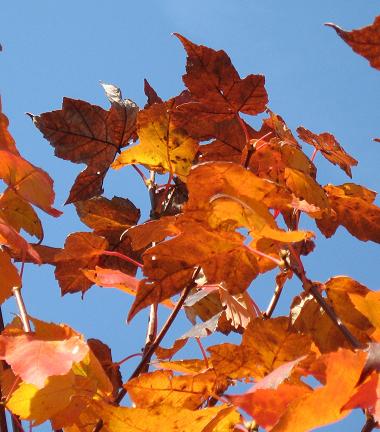
Milkweed in autumn (click to enlarge)–photo by Julie McCarty

When I was a child, we loved to play with milkweed seeds, watching them float away like bubbles on the wind. I was reminded of this recently when I spotted this milkweed plant in Lebanon Hills Regional Park here in Eagan.

Seeing these seeds bursting forth makes me think of all the hopes and dreams lying dormant within each of us. In my forties, it felt like life was “over” (I’m so old!) –and yet here I am in my early fifties, eagerly learning new things, such as watercolor painting, digital photography, and gardening techniques.

The good Lord gives us many gifts and talents deep within ourselves. Is there something you have always wanted to do, but never have gotten around to doing it?  Chances are, it’s not too late. You may need to modify the goal or alter your plan a bit, but that unique packet of gifts inside you is still there.

But here’s the thing about seeds: some part of our life activities may seem to “die” in order to make room for something new. The old “something” may be basically good or perhaps something that is no longer working for us, but we decide to focus our efforts on this new thing. After all, there are only so many hours in the day.

If there is something you really feel called to do, some deep desire in your heart, ask God to show you the way. Take one step in that direction and see what happens.

Allow the “wind” of the Divine Spirit to carry the seeds within you wherever God desires. Something good is bound to happen.

Until next time, Amen! 
Psalm 16–Path of Life

You have made known to me the path of life;
you will fill me with joy in your presence,
with eternal pleasures at your right hand.
Psalm 16:11

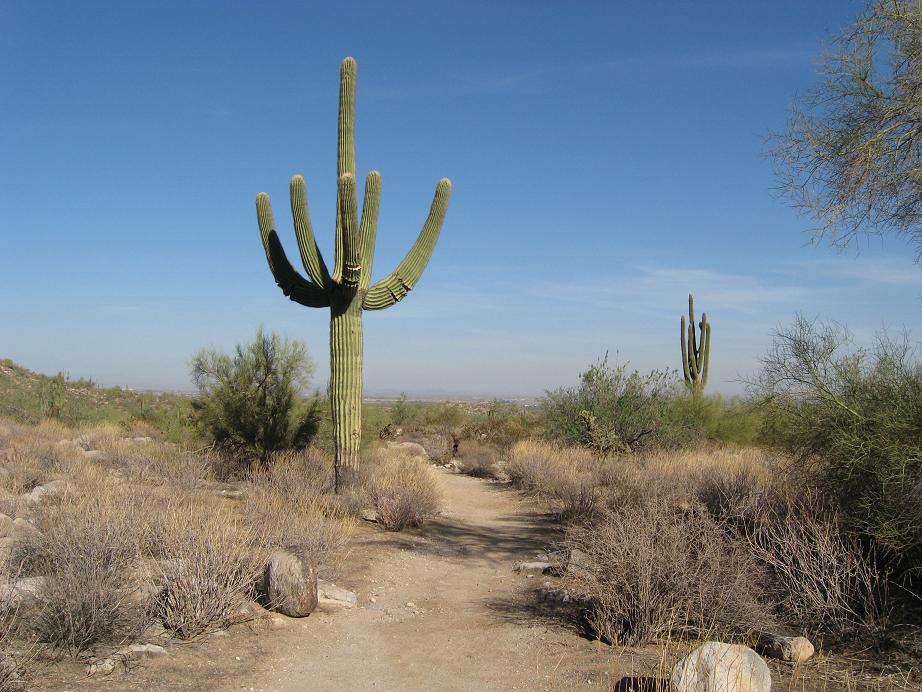
When we visit family in Arizona, my husband and I enjoy taking hikes in wide open, preserved desert spaces. Living in Minnesota, it is easy to forget just how tall the saguaro cactus can be, so here is a picture of my husband standing beside one for a little perspective (click on picture to enlarge):

Sometimes our journey in life can feel like a walk through a vast desert, filled with prickly plants and sharp stones. We can feel lost in the wilderness, a place that on the surface seems dead and lonely. The hot sun may drive us to the ground with lack of energy–or dust storms may cloud our view and choke our lungs.

Although it may look lifeless, the desert is indeed filled with living things–it’s just that it takes some learning and experience to find these things when you are new to arid environments. Besides the first things that come to many minds (poisonous snakes and insects!), there are also the lovely song of the cactus wren, gorgeous sunsets, and the sweet smell of sagebrush after the rain. Desert brush and cactus can even provide edible food and drink if you have a sharp knife and know where to look. There are also the raw materials for making soap, baskets, pottery, and soothing balm (aloe).

In the spiritual life, sometimes we suddenly discover God has transplanted us to a “desert”–that is, an unfamiliar territory that seems boring, dull, and lifeless, or maybe even scary and dangerous. We may feel upside-down, inside-out, or just plain lost. Nothing feels normal.

Yet, like the desert, there is often hidden life found where we least expect it. In the spiritual desert, discovering this new life may take longer than we would like. But no matter how bleak or desperate it may seem, God promises to show us the “path of life,” to bring us joy once again–the joy that is found not in worldly things, but in being in God’s presence. Whether we feel this presence or not, we can trust that God will never leave us, no matter what happens.

We may feel “lost,” but deep down inside, God is ever showing us the path that leads to spiritual life, eternal joy in God’s presence. We can trust that this joy will  resurface again one day.

You have made known to me the path of life;
you will fill me with joy in your presence,
with eternal pleasures at your right hand.
Psalm 16:11

Until next time, Amen!

Spiritual Aerobics

For reflection or discussion:

Have you ever experienced a period in your life when things seemed overly difficult, frightening, or confusing? What helped you through that time? Looking back, can you find anything good that God brought about as a result?

Mother Teresa speaks about loneliness

Today is a special day honoring Blessed Mother Teresa of Calcutta. The 2-minute video below shows Mother Teresa talking about her concern for those who feel lonely, unwanted, or rejected–and how Jesus knew their suffering in the Agony in the Garden.

For reflection:

–Who in my circle of friends or acquaintances might be feeling this unwanted, left-out feeling or great sadness at this time? How might I reach out to them with compassion?

–Who in my community or country is most likely to feel unwanted, lonely, or rejected? What might I do to help them feel wanted and loved by God?

–Mother Teresa saw in the poor the suffering of Jesus. Is that how I view those who are poor or disadvantaged?

Prayer:

O God, you know sometimes I am less than Christ-like in my approach to others. Help me to find ways to put aside my selfishness or poor attitudes, so that I may reach out to others with the love of Christ.  I especially pray for . . .  .   May all who feel lonely or unwanted receive comfort this day.  Amen.

Work to live or live to work?

Do you work to live or live to work?
A Guided Meditation 

Labor Day weekend is a great time to think about this question. Do you work a 9-5 day and set it all aside afterwards to pursue your heart’s desire?

Or, are you blessed with a career so meaningful that work is living at its best?

Whether you enjoy your job or not, how does work fit together with the other pieces of your life?  Do you experience quality time with family, friends, and God? Are you able to give back something to your community? Ever just stop to smell the roses?

To reflect on this question, you might want read about how people in places outside the U.S. view work in  Mariela Dabbah’s article “Work to Live or Live to Work?”     To read about the effects of overwork on one’s health, check out this article on netdoctor.com , or explore Are You a Workaholic?  on WebMD. If you are a business manager, you might want to read about how overworking can actually lower productivity in the workplace, and ways to overcome the problem on  Joe Robinson’s website .

In hard economic times, many people feel immense pressure to work longer hours or risk losing their jobs–and that makes it all the more complicated to discuss the question. There are no easy answers here–and I certainly find it challenging to juggle all the pieces of my own life (it feels like a moving target!).

Even so, it’s worth thinking about:  Is my entire self-worth wrapped up in the work that I do? Do people have value beyond what they accomplish in the business/career world? What is the place of Sabbath and prayer in my life? Where is God leading me, and how do I best respond?

O God,
 You created us with many abilities, gifts, and inward beauty. May we always use these gifts wisely and yet remember that your love for us is not based on mere productivity. Open our eyes to the beauty of your creation and give us the courage and time to “smell the roses.”

Amen.

Kristen Hobby on Spiritual Direction

People sometimes ask me, “What is spiritual direction?” Great question! However, it’s not so easy to answer in a single sentence.

Historically, spiritual direction has been a one-on-one process of “companioning” with a person on his or her spiritual journey. In some ways it’s a little like meeting with a counselor or church pastor, but often those meetings are dealing with the search for solving a particular problem, whereas spiritual direction is about paying attention to the presence of God in your life (not to say that “problems” are excluded from the conversation in spiritual direction!).

Some people think of a spiritual director as a sort of coach, mentor, or personal trainer for the soul. Others may view their spiritual director as a spiritual companion, soul friend, or “spiritual midwife.”

In the short video below*, spiritual director Kristen Hobby from Melbourne, Australia answers many questions about the spiritual direction process in our times:

(If you don’t see the video here, visit YouTube or Google and type in the search these words: Kristen Hobby spiritual direction .)

Questions or comments about spiritual direction? Please share them below or  send them to me in e-mail (see contact page). I’d love to hear from you!

Until next time, Amen!

***

*Special thanks to Spiritual Directors International, a network of spiritual directors of many religious traditions throughout the world, for making this video available on YouTube.

Ode to Orange–A Poem

Earlier this summer I attended the Summer Institute in Spirituality and the Arts at United Seminary. This year’s workshops explored freeing your voice, creativity and spirituality, performance and spirituality, and experimenting with art as a springboard for writing poems.

United Seminary Chapel, Minnesota (click on to enlarge)–
photo by Julie McCarty–2012

Four days packed with the interplay of spirituality, art, and writing–three of my favorite things. I thought I’d died and gone to heaven!

One of the activities involved writing a poem focused on the wonder of a particular color. I love many colors and color combinations, but I decided to stretch myself by choosing orange, my least favorite color (no offence, orange-lovers!).

After playing with orange paint, I surprised myself by writing this poem:

Ode to Orange 

My least favorite color—
purple’s shadow side—
nonetheless captivates me
in autumn’s luminosity
of sparkling maple leaves,
pregnant pumpkins,
and shining haystacks
on an Amish farm.

Then, too, the heady smell
of a Phoenix February:
orange blossom perfume,
Mom’s orange cake, and Tang,
the inflatable drink of astronauts. . .

How unusual the first time
I traveled through
peach painted deserts,
rusty red-orange cliffs
or Santa Fe hills dressed
in piňon pine polka-dots
(sprinkled just so by Mother Nature)!

When angled sun shines
at the end of the day,
orange speaks to me–
pinkish adobe homes
turn yellow-orange,
set-aglow, illuminated:
God exhaling spirit
into our oh-so-earthy reality.

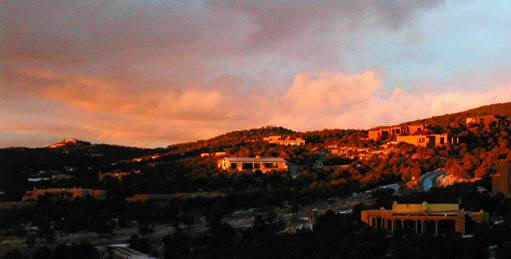
Santa Fe hills–photo by Aysha Griffin


Spiritual Aerobics

Spiritual Aerobics

What is your least favorite color and why?  Try this: See if you can think of things you like that are that color. At the end, give thanks to God for all colors.

When there is no vision, a people perish.–Emerson

Morning Light on Smoky Mountains–photo by Julie McCarty, Eagan MN USA
(click on image to enlarge)

When there is no vision, a people perish.
–Ralph Waldo Emerson

Funny how getting away from it all for a time can give one a new perspective. Vacations and retreat experiences are important to our well-being. Unhurried time with family, long walks, extra sleep, and different surroundings are good for us on every level.

This summer, while taking some breaks from blogging, I’ve been focusing on other creative activities. I’ve experimented with new plants in the garden and practiced taking photos of nature. I attended a couple of seminars connecting art, writing, and spirituality, and vacationed with my hubby.

Although I haven’t blogged much during the summer, I think the break will be fruitful in the long run. Funny how that works: sometimes when you stop trying, something good is percolating deep down inside. (We’ll see if this is true…!)

In future blog posts, I hope to bring some fresh ideas and new formats. In addition to the longer spiritual reflections now and then, I hope to add some simple creative images (photos, artwork) along with spiritual quotations. I hope to provide starter dough for your own prayer and spiritual reflection, as well as my own.

Mid-August is a time of preparing for the new school year, planning church ministries, and signing up for sports and recreational programs. As I plan activities, the words of Emerson draw me to think more deeply than mere scheduling:

When there is no vision, a people perish.

What is your vision for today and tomorrow? How will you make the world a better place? What is the one thing God is hoping you will do?

Take a moment and just think about it. What is the best thing you could offer God right now? How do you envision your future–and the future of your children, community, and world? What one step you can take today, headed in the right direction?   

(pause and pray if you are a praying person)

Until next time, Amen!

Following Jesus–even when times are hard

Cast yourself into the arms of God and be very sure that if He wants anything of you, He will fit you for the work and give you strength.    –St. Philip Neri *

Sometimes we feel the nudge of the Spirit asking us to do things we think cannot possibly do. Perhaps we have been hurt in the past by rejection or loss, and are afraid to take up loving someone again. Maybe we feel we don’t have enough education, good looks, or poise for a task. We may feel too young to qualify, or too old to try something new.

But following Christ (or any spiritual path) involves remaining open to new things, to go wherever the Spirit leads us. Sometimes this is easy to do, especially in the first flush of spiritual enthusiasm. However, when times get hard, when we are tempted, or when others around us ridicule us, it can be very difficult to live as Jesus lived. 

St. Philip Neri reminds us that God does not ask us to do the impossible, at least not what it truly impossible. Even in the rough places in the road, God is there with us, to guide us, to comfort us, and to challenge us to grow.

Is there something in your life that God is asking you to do, but you are shrinking from out of fear?

If that “something” really is God’s desire for your life, then we can be sure that somehow, some way, God will bring it about, sooner or later—if only we open ourselves to receiving divine guidance, divine strength. It’s worth reading Philip Neri’s words again; write them on your heart (as I will strive to do as well):

Cast yourself into the arms of God and be very sure that if He wants anything of you, He will fit you for the work and give you strength.

Until next time, Amen!

 

*Philip Neri quote from The Wisdom of the Saints: An Anthology by Jill Haak Adels (Oxford University Press), p. 58.

Happy Thanksgiving

O give thanks to the Lord, for he is good;
his steadfast love endures forever!
–Psalm 118:1 (NRSV)

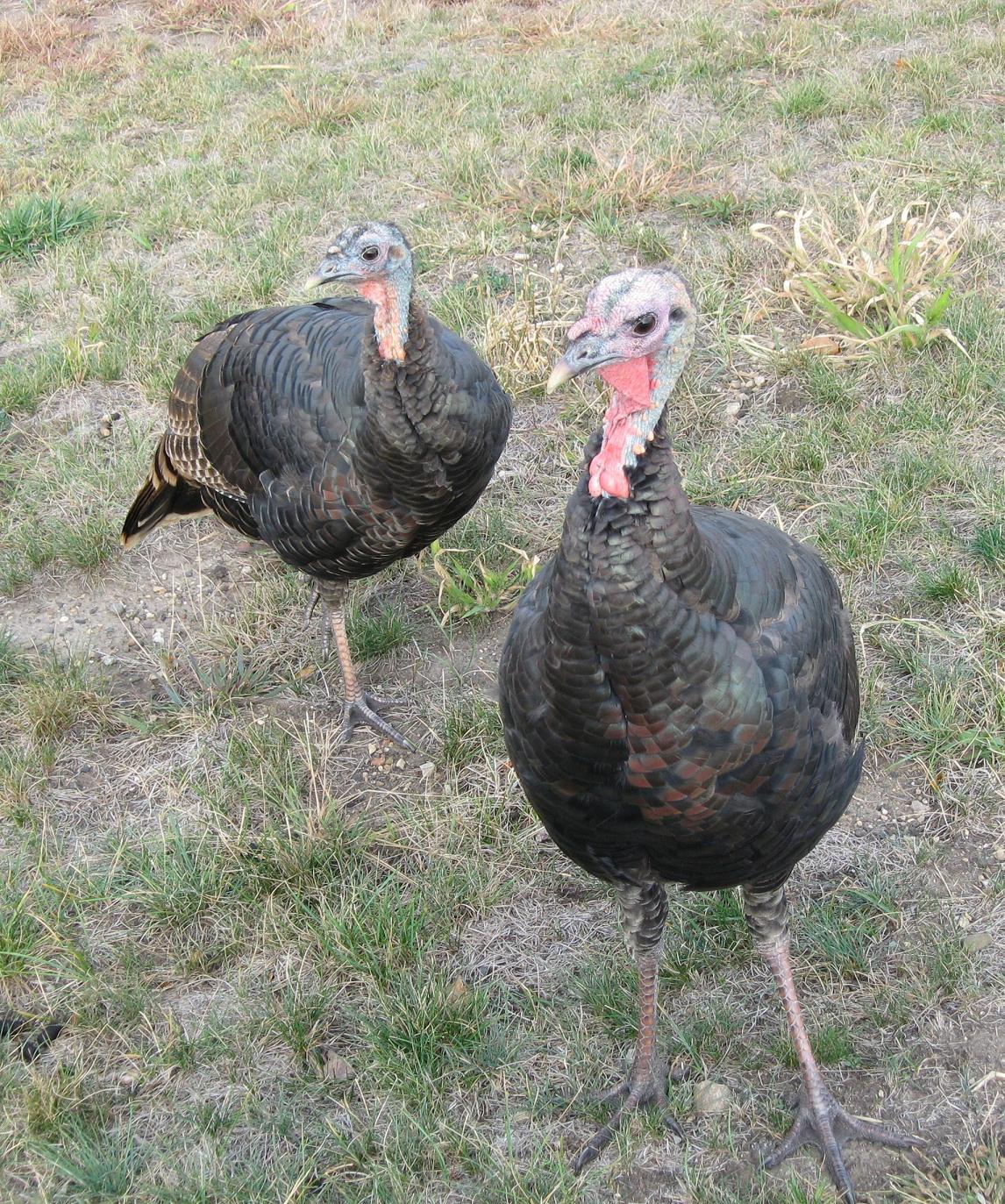
Wild turkeys in a nearby suburb--photo by Julie McCarty 2011

When I am feeling a little blue or worried in the middle of the night, I sometimes stop the negative thoughts by attempting to list 25 things for which I am grateful. The list can be wild or seemingly insignificant–whatever occurs to me at the time. I am thankful for a lush tomato from the garden, the color lavender, the scent of bread baking; for specific people/relationships in my life; for time alone with God and time together with others to celebrate. By the time I list 25 things, whatever was bothering me seems a less significant.

The above verse from Psalm 118 reminds me that one thing to be grateful for is the way God loves us no matter what. We sin, we hurt ourselves or others, we make mistakes–and yet, God’s love is ever-present, ever-faithful, ever-merciful.

In the original Hebrew of Psalm 118, the word for “steadfast love” is checed (pronounced  kheh’ – sed ). Checed or hesed, as it is sometimes written in English, is translated various ways depending upon the bible translation and the particular context of the bible verse. Sometimes it reads like this:

O give thanks to the Lord;  for [he is] good:
because his mercy [endureth] for ever.
–Psalm 118:1 (KJV–my underline)

Or, this:

Give thanks to the Lord,  for He is good:
For His lovingkindness is everlasting.
–Psalm 118:1 (NASB–my underline)

Checed can be translated all of these ways. God is good, and God’s faithful love, kindness, and mercy are all everlasting.*

Thanksgiving is a time of offering prayers of thanks for  many things. Most often, we thank God for the food on the table, a roof over our heads, our family and friends, our health, our jobs. These are all good prayers of thanks.

But the bible verse above makes me wonder: when have I ever thanked God for his love? Have I told God I appreciate his presence in my life? Have I expressed thanksgiving for the good Lord’s compassion, his kindness, his mercy and forgiveness?

Thank you, God, for your blessings this Thanksgiving–and thank you even more for the gift of Yourself, given to us through the sacraments, the Word of Scripture, the beauty of nature and other people, and your Spirit deep within our hearts.

Until next time, Blessed Thanksgiving!

* Note: Information on checed was found in the Blue Letter Bible online using the bible verse and Hebrew lexicon.

Also note: You can now print off these reflections, email them to others, Facebook or Twitter, using new features of WordPress at the Spiritual Drawing Board shown at the end of each post. (If you have trouble with printing using your server–as I did–try using Google Chrome or Mozilla Firefox servers.)


Elizabeth of Hungary: Patroness of “Juggling”

Rising very early before dawn, [Jesus] left and went off to a deserted place, where he prayed. (Mark 1:35)

St. Elizabeth–Spinning to make clothes for the poor–Marianne Stokes

In my Catholic upbringing, I got the impression that the only path to sainthood would be priesthood for men and religious life (becoming a nun) for women. I rarely heard about married women saints, and when I did, they were described to me as holy because of becoming nuns or founding convents after their husbands died.

Because of this, I have a special place in my heart for St. Elizabeth of Hungary, the medieval wife and mother who didn’t merely “tolerate” marriage (after all, the marriage was arranged by one’s parents) but rather genuinely liked her husband.

In her short lifespan of 24 years, Elizabeth integrated many callings: queen, wife, mother, woman of prayer, personal service to the poor and sick, etc. Elizabeth’s example appeals to people of many walks of life for many reasons, but I like to think of her as the patroness of “juggling:”

When I feel overwhelmed with balancing the pieces of my life, I think of St. Elizabeth of Hungary, the thirteenth-century queen who could be called “the patroness of juggling.” This young woman not only devoted herself to raising her children and spending time with her husband Ludwig (whom she adored), but she also attended church frequently, managed the castle while Ludwig was away on extended business, developed a rich prayer life, and personally ministered to the poor and sick of the kingdom (something the elite found rather revolting). 

Apparently Elizabeth couldn’t find enough prayer time to satisfy her, so she instructed her maid to sneak into the royal bedroom each night, reach under the bed covers, and pull on her toes to wake her. Elizabeth would slip away without disturbing Ludwig’s sleep to pray in secret. This clever plan worked well for a time, until one night, when the servant girl reached between the sheets, the king suddenly bolted upright in bed. Apparently she had found the wrong toes.

Jesus, too, often had to find ways of stealing away from his busy ministry to catch his breath. [In Mark 1:35-39], it appears that the disciples do not know where he has gone. When they find him, Peter sounds exasperated: “Where have you been? Everyone is looking for you!” It’s as if he thinks Jesus is missing a photo-op and the chance to work the crowd. But Jesus knows his priorities: his work must be grounded in a healthy, personal relationship with his heavenly Father.  

from The Pearl of Great Price: Gospel Wisdom for Christian Marriage (by yours truly, Julie McCarty; published by Liturgical Press)


When we feel pulled in many directions, unsure which task to do next, whether to say yes or no to this or that, or how much time to devote to prayer, we can take heart that others before us (including Jesus!) certainly faced similar human challenges–yet ultimately found their true Christian fulfillment.

St. Elizabeth of Hungary’s feast day is Nov. 17. For more about her read here  or view a slide show here .

Until next time, Amen!