New Page about Spiritual Direction

Yesterday I learned how to add a whole new sticky page to the Spiritual Drawing Board. The page I created tells about the time-honored practice of spiritual direction, often called “spiritual companioning” today.
(You can access this new page by clicking on the tab labeled spiritual direction above the sunrise photo. If you are receiving this post via e-mail subscription, you can click to my blog or else just google “Spiritual Drawing Board.”)

If you are looking for a safe place to explore your own spiritual life, to wrestle with soul questions, to learn about prayer in a one-with-one setting, think about finding a spiritual director. If you live near Eagan, Minnesota, and feel you might like to work with me, my contact info is on the Spiritual Direction page. You can locate other spiritual directors by asking church staff, spirituality or retreat centers, or searching on the website of Spiritual Directors International.

By the way, Spiritual Directors International website has some great YouTube videos of people talking about their experience with spiritual direction.  

Hope your Lent is proving fruitful–and if not, it’s not too late to delve into a good spiritual book, take a soul walk,  or turn to prayer. 

Until next time, Amen! 

P.S. If you are receiving this in e-mail, feel free to pass it on to others who might be interested in spiritual direction. (It is always okay to forward my Spiritual Drawing Board posts!)


A Personal Focus for Lent

The Lord said to Moses, “Come up to me on the mountain, and wait there. . . . Moses was on the mountain for forty days and forty nights.  (Exodus 24:12, 18)

 Then Jesus was led up by the Spirit into the wilderness to be tempted by the devil. He fasted forty days and forty nights. . .     (Matthew 4:1-2)

Ash Wednesday is just around the corner, and I’m wondering what spiritual practice I might do for Lent. If you are like me, you have experienced various Lenten penances related to prayer, fasting, and almsgiving over the course of your life. Some of my experiences produced quality spiritual growth. Other times I failed to follow through or had results that were, um, a little “silly” (such as the time I gave up potato chips and ate so many chocolate chip cookies that I actually gained weight during Lent).

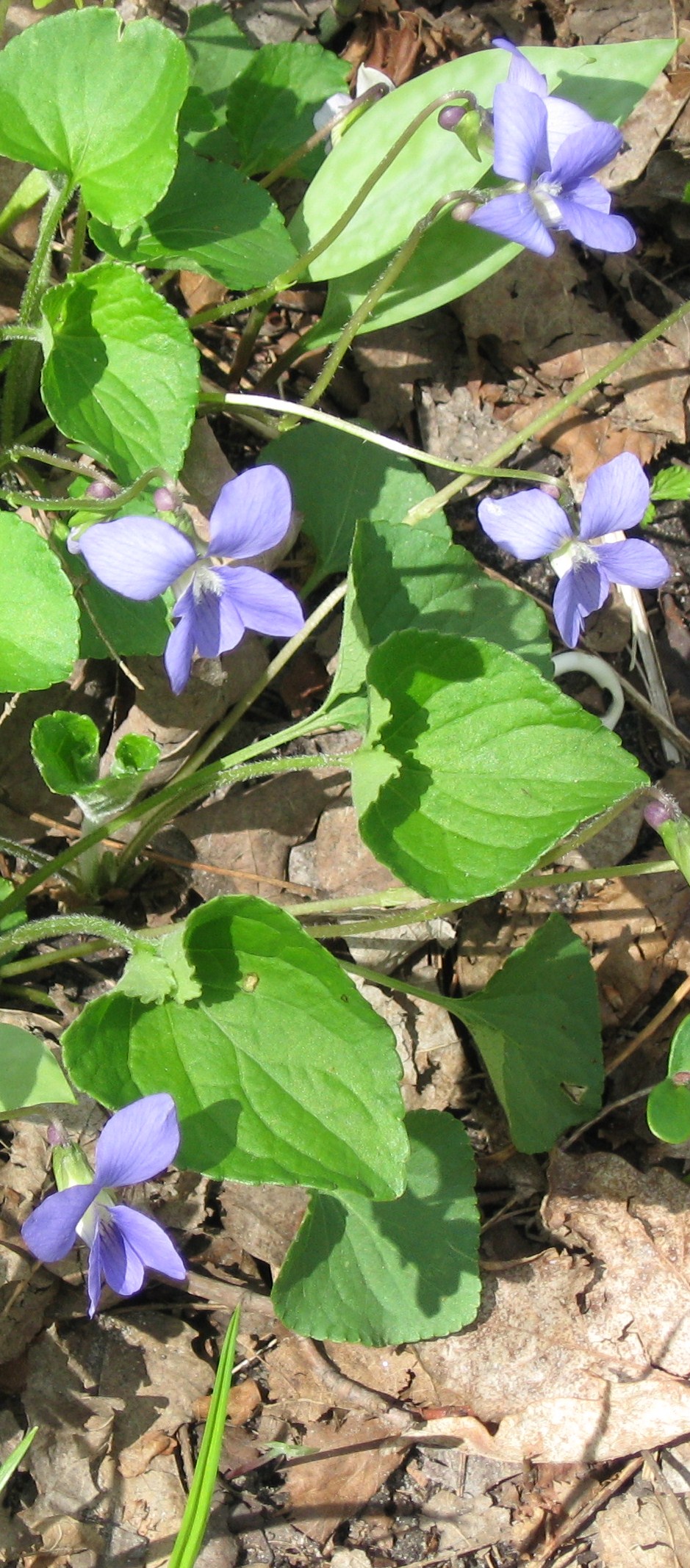
Waiting for Spring -- Photo by Julie McCarty 2011

One spiritual practice that has been meaningful for me is reflecting on a single word, phrase, or bible verse for the whole 40 days. For example, one year I focused on the virtue of patience. I read about patience and pondered what patience is and what patience is not (laziness or procrastination). I asked God in prayer to help me be patient. When life brought me annoying moments, I tried to be patient.

One possible pitfall of this theme approach is that I might forget to follow through for the entire 40 days, but I have found ways around that. I can post my theme in places I’ll see it, such as the bathroom mirror, refrigerator, computer screen saver or cell phone banner. I can find a book on the topic and spend a few minutes each day reading about it. I can make it a point to weave my theme into prayer time and the routine of daily living. On occasion, I’ve asked spiritual people what they think about the topic.

When making plans for Lent, it’s important—as always—to ask the Holy Spirit to inspire your choices. (Why do I always think of this tip last? It should be first!) The “theme approach” may not be for everyone.   Think about what will build your relationship with God, and what will deeper your love for others.      

May all we do glorify God and build bonds of love throughout the earth. Until next time, Amen!

Spiritual Aerobics for Lent

   If focusing on a theme doesn’t appeal to you, here are 13 other ideas:                 

  • Volunteer at a food pantry, homeless shelter, or other charitable organization.
  • Plan quality time with your children: eat together, use discussion starters, read together.
  • Organize recycling in your home in order to take care of God’s creation.
  • Visit a lonely or homebound person.
  • Reduce the amount of time spent with television, social networking, internet surfing, or video gaming.
  • Listen to inspiring, spiritual music while commuting to work.
  • Care for the body God gave you by increasing your sleep or exercise.
  • Read one book of the bible or other spiritual book slowly and reflectively. 
  • Sort out closets and donate clothing to those who need it. 
  • Teach your children a new prayer and pray it together when you gather for meals.
  • Be kind to someone you often ignore. Pray each day for him or her. Smile genuinely and listen respectfully to this person.
  • Fast from shopping for clothes (or books, electronic gadgets, makeup, etc.)
  • Visit a retreat center. If you cannot go away on a retreat just now, make arrangements to go on retreat later this year.

Praying with “Migrant Mother” using Visio Divina

On the website Patheos, Presbyterian minister Tim Mooney writes about a prayer form called Visio Divina, a way of praying with sacred art or other images. Visio divina (“divine seeing”) models itself after lectio divina (“divine reading”), that time-honored Christian way of thoughtfully meditating on Scripture. (Read more about visio divina here.)

 Artwork and religious symbols often draw me into a quiet, reflective zone, so I decided to give visio divina a try and share my experience here at the Spiritual Drawing Board. Just so I wouldn’t have too many preconceived ideas, I looked for an image not usually found in churches, and decided upon Dorothea Lange’s 1936 photograph called “Migrant Mother.”

 Experiencing Visio Divina

As the article on visio divina recommended, I set aside 20-30 minutes for the process. After asking the Holy Spirit to guide my prayer, I spent a little time just observing the various parts of the picture:

  • The woman’s sleeve is tattered. She has no make-up and there are wrinkles near her eyes.
  • Why do the children hide their faces? Are they ashamed to be seen?
  • The baby on her lap is wrapped in an oversize garment and has dirt on his or her face.

 The woman looks to be 40-something, but I know from my reading that her name is Florence Owens Thompson, 32, married mother of seven children. In this photo, taken during the Great Depression, she is sitting in a three-sided lean-to canvas tent. (View other pictures taken that day here. )

These facts make me think about the economy of today and people who suffer around the world, especially the homeless, many of whom are children. I imagine the faces of other migrant women of various races and ethnicities. Would I feel the same empathy for each of them as I feel for the woman in the picture?

 After praying for the grace to love all people with equal intensity, I focus my attention back on the picture once again. The woman’s expression haunts me. She may be worried, but she is determined. I think she is going to do whatever it takes to feed her children. With her hand placed under her chin, she reminds me of Rodin’s bronze sculpture The Thinker. Yes, I decide, she is indeed a strong woman, a brave woman, dead set on caring for her hungry children.

 I wonder, did Mary, the mother of Jesus, ever look so strong and determined? She, too, was a “migrant mother,” on the move with Joseph, first traveling as a pregnant woman to Bethlehem, then fleeing to Egypt to save her child from death, and some years later to Nazareth. Did the Holy Family ever experience hunger pangs? Surely Mary must have felt this same fierce love and deep resolve to do whatever was necessary to care for her Child.  

 Why have I never seen this look of strength and determination on the face of Mary in statues or paintings? Wouldn’t Mary have been radically committed to do all in her power to fulfill God’s will? Wouldn’t her love of God have been strong? Are these characteristics of Mary portrayed in sacred art but I just didn’t notice?

 Come to think of it, wouldn’t God have the same type of parental concern for us? Could we imagine the Divine Face looking something like this woman, in terms of her strength and determination? Doesn’t God love us as much—no even more—than the very best of mothers?

Observing the Results

Sometimes we think of Scripture as comforting, but the Word of God also challenges us to become more like Christ. I think the prayer form visio divina has the same potential. After the above prayer time, I observed myself feeling less whiney about my own inconveniences and more grateful. I found myself intentionally smiling at people who look “different” from me. And, when writing this post, I recalled that the Hosea 13:8 compares God to a mother bear, who expresses fierceness if her cubs are threatened or taken away. 

Spiritual Aerobics –Try visio divina yourself, using whatever image or artwork you like. Many musuems have artwork available online. For visio divina directions, click here.

Making Choices: What’s the next step?

A journey of a thousand miles begins with a single step.
            Chinese Taoist philosopher Lao-Tzu
  

A number of years ago, while discussing an issue with my spiritual director, I suddenly burst out, “I wish God would just give me a recipe for my life.”           

To this, the saintly elder nun replied, “What kind of God would that be?”  

This answer caught me off guard, and since then I have pondered its meaning many times. Certainly God gives us various guidelines for the spiritual journey, but God also gives us the free will to choose the many ways in which we can express our love.  

Would I really wish that God decided everything for me? Wouldn’t that make me a puppet on a string or a computer that was just programmed to act in a predetermined manner?

 If one believes, with Saint John the Apostle, that God is love, or at least believes in living according to the ways of compassion, then it follows that we are given freedom in order to choose the many ways in which to express a healthy love for God, self, and one another.  

 What’s the next step? 

When I feel a little “stuck” in a project or indecisive about something, I consider a question I first heard about in a spiritual direction training course: What’s the next step?   

Retreat leader Pierre Wolff describes this method in his book Discernment: The Art of Choosing Well (Liguori, Revised edition, 2003, pages 27-30).  Focusing on just one step forward in love can help us keep from giving up a seemingly monumental project before we even begin. One step at a time also keeps us from expecting ourselves to have everything figured out and the decision completed within an unreasonable time frame.  

I also find that simply taking one simple step helps me keep from putting off something indefinitely. I can sort one pile of clutter rather than set myself up to clear out all the cobwebs of my house in a day (an unreasonable goal that is destined for failure). If I am feeling “stuck” in a writing project, I can ask myself, what is the one thing I could do today to move it along? If I’m experiencing a strained relationship, I can select one little way to reach out to the person with compassion.           

 A journey of a thousand miles. . .

“A journey of a thousand miles begins with a single step.” This wise saying is attributed to Lao-Tzu, a major spiritual figure in Taoism. (Some say that the saying originated with Confucius.)  

I believe that it is true that the little tasks we do, the little decisions to love, the day-to-day ways we treat each other, gradually add up to something tremendous, as Mother Teresa was fond of saying, “something beautiful for God.”

However, there is another meaning to this saying that is not readily apparent in the English translation. According to the website Quotationspage.com, the original Chinese proverb can also be translated into English in this way: “The journey of a thousand miles begins beneath one’s feet,” or “Even the longest journey must begin where you stand.” It is explained that this translation means that actions are best when they arise out of stillness.  

That means, when you are thinking about a choice, or doing some action, stop to think about it first. Take a walk alone to think it over, meditate, mull it over a bit in your journal, or spend some time praying about it. Listen to where the Spirit is moving in your heart.  

Hmmm… Isn’t that what Jesus did when he went out in the desert to pray, before beginning his public ministry, before selecting his ministry companions?  

Just for today, let us ask ourselves, with the attitude of compassion, what’s the next step?   

For reflection: What do you find helps you make good decisions?

The Breath Prayer Revisited

A simple way to pray everyday

Blue sky with snowy branches in Eagan MN

A number of years ago, I published an article about the “breath prayer” a contemplative nun had taught me. Since then, I have found this way of praying to be such a blessing that I would like to share it with readers once again.

 There are many ways of meditating in relation to breathing, but this one is called the breath prayer because it only takes the space of one breath to say it.

 In the years since writing that article, I have found I like using the prayer of Jesus on the cross: “Father, into your hands I entrust my spirit” (Luke 23:46).  I can connect the first part of the sentence with inhaling and the second part with exhaling. (Do not hyperventilate. Prayer is not about creating “special effects”!)

 Over the years, I have developed a simplified version: “Your hands / my spirit.” This short version is like the code talk of lovers: God knows what I mean. Putting myself in God’s hands takes me out of my own self-focus of controlling, fixing, and do-do-doing, so that God can be in charge of the moment.

 Some Christians are concerned about using mantras or repetitive prayers, but I do not feel believe that is a problem in this case, unless you are counting up how many times you say the breath prayer and then expecting God to pay you in return for your effort.

 At any rate, there is no need to say the breath prayer a million times. After a while, you may find yourself drawn into a quiet space in the presence of God. At that point, by all means, let go of words. You may just feel like a little child resting in the warm glow of the loving arms of God. At that point, who needs words?


For more info, here is the original article  from 2003:

“Pray without ceasing,” writes Saint Paul in the First Letter to the Thessalonians (5:17).

“Isn’t that a sweet sentiment?!” I think to myself, somewhat sarcastically. How can the typical Christian pray always, even amidst rambunctious toddlers or ballistic office phones?

It is tempting to shrug our shoulders and leave all that endless praying stuff to the monks. However, I notice that St. Paul was not preaching to cloistered religious folk, but ordinary baptized believers like me.

Over the course of church history, to “pray without ceasing” has come to mean developing an ongoing awareness of God’s loving presence in every moment. Although we need specific “quality time” for prayer each day, we also gratefully recall the divine presence while washing dishes, meeting with a client, or repairing roof shingles.

A Carmelite nun I know (who wishes to remain anonymous) teaches visiting retreatants a way to encourage awareness of God’s presence through a method she calls the “breath prayer.” After forty-seven years as a nun, she has found the breath prayer to be a great help to people both inside and outside the cloister.

The breath prayer, Sister explains, is like the traditional “ejaculatory prayer,” because it is very short and can be used anytime and any place. However, when one prays the breath prayer, the words are said inwardly, slowly, and in unison with one’s breath. One recalls that we depend on breath for life, and it is the Creator who breathed life into us in the very beginning. God is closer to us than even our breath. If we do not breathe, our bodies die, Sister reminds us, and if we do not pray, we die spiritually.

To compose your own breath prayer, Sister suggests first selecting your favorite name for God (Spirit, Abba, etc.). Next, add a short phrase expressing your love or petition. “My God, I love you,” “Shepherd, guide me,” or “Jesus, help me to love like you” are three examples of breath prayers. Pray the first part of your prayer while inhaling and the second part while exhaling. (If you are tense—like me!—let the prayer slow you down. Do not overdo the breathing. Remember, the main point is to gently focus on God’s presence.) 

You can also use your favorite Scripture verse, in simplified form, for your breath prayer. For example, the words of Mary, “Behold, I am the handmaid of the Lord. May it be done to me according to your word” (Luke 1:38), can become the breath prayer: “Be / it done.” Jesus’ words, “Father, forgive them, they know not what they do” (Luke 23:34) becomes the breath prayer “Father / forgive them.”

After choosing your breath prayer, select some mental cues to remind you to pray during your average work day. For example, a teacher prays briefly every time the school bell rings. A dentist prays every time she washes her hands. Use your breath prayer when standing in line, downloading computer files, walking down the street, or even when feeling stressed or angry.

Over time, Sister says, the practice of the breath prayer prepares our hearts for other forms of prayer. Gradually, turning to God inwardly during daily tasks will become more and more natural, as natural as breathing itself.