
Happy Thanksgiving

O give thanks to the Lord, for he is good;
his steadfast love endures forever!
–Psalm 118:1 (NRSV)
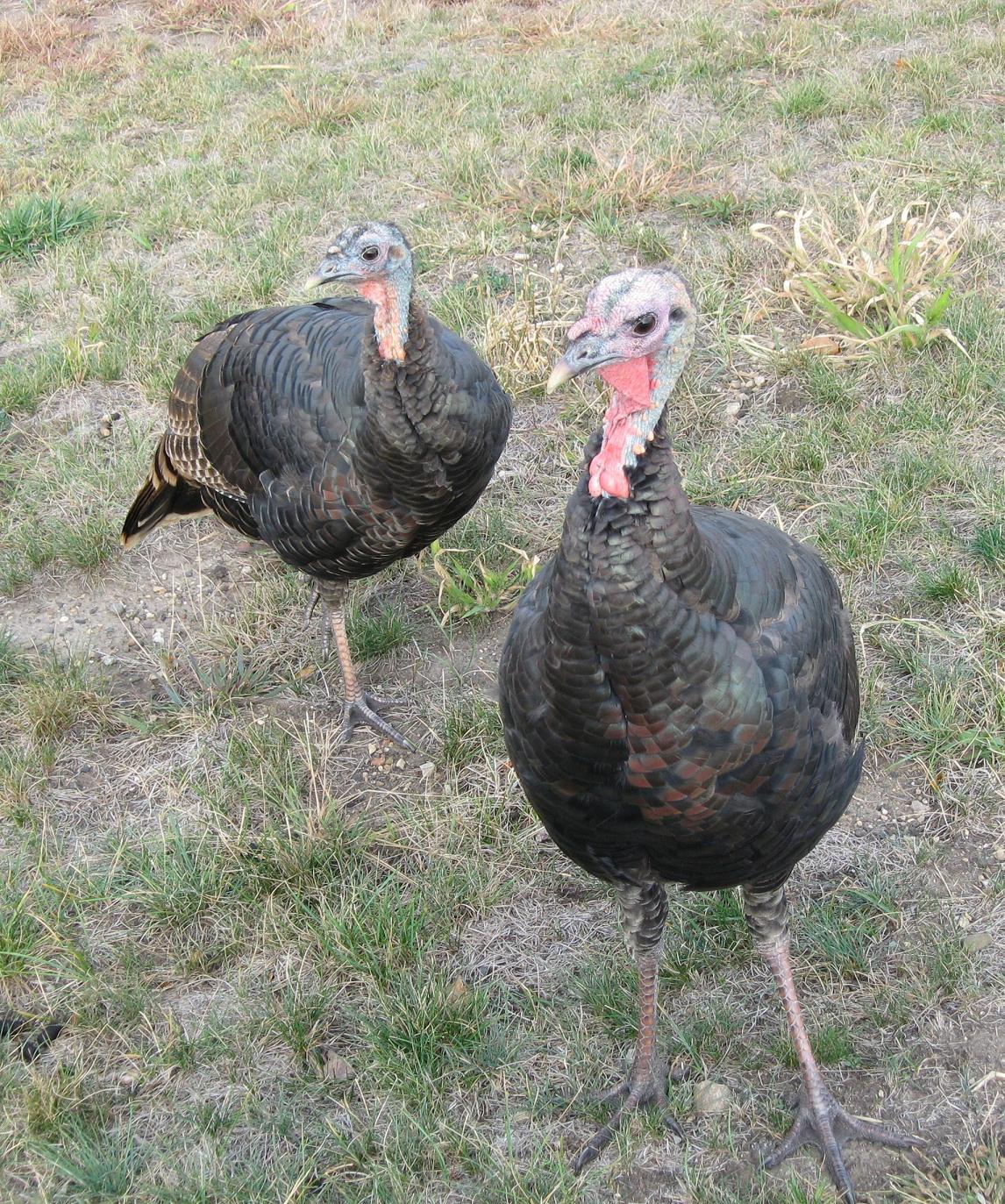
Wild turkeys in a nearby suburb--photo by Julie McCarty 2011

When I am feeling a little blue or worried in the middle of the night, I sometimes stop the negative thoughts by attempting to list 25 things for which I am grateful. The list can be wild or seemingly insignificant–whatever occurs to me at the time. I am thankful for a lush tomato from the garden, the color lavender, the scent of bread baking; for specific people/relationships in my life; for time alone with God and time together with others to celebrate. By the time I list 25 things, whatever was bothering me seems a less significant.

The above verse from Psalm 118 reminds me that one thing to be grateful for is the way God loves us no matter what. We sin, we hurt ourselves or others, we make mistakes–and yet, God’s love is ever-present, ever-faithful, ever-merciful.

In the original Hebrew of Psalm 118, the word for “steadfast love” is checed (pronounced  kheh’ – sed ). Checed or hesed, as it is sometimes written in English, is translated various ways depending upon the bible translation and the particular context of the bible verse. Sometimes it reads like this:

O give thanks to the Lord;  for [he is] good:
because his mercy [endureth] for ever.
–Psalm 118:1 (KJV–my underline)

Or, this:

Give thanks to the Lord,  for He is good:
For His lovingkindness is everlasting.
–Psalm 118:1 (NASB–my underline)

Checed can be translated all of these ways. God is good, and God’s faithful love, kindness, and mercy are all everlasting.*

Thanksgiving is a time of offering prayers of thanks for  many things. Most often, we thank God for the food on the table, a roof over our heads, our family and friends, our health, our jobs. These are all good prayers of thanks.

But the bible verse above makes me wonder: when have I ever thanked God for his love? Have I told God I appreciate his presence in my life? Have I expressed thanksgiving for the good Lord’s compassion, his kindness, his mercy and forgiveness?

Thank you, God, for your blessings this Thanksgiving–and thank you even more for the gift of Yourself, given to us through the sacraments, the Word of Scripture, the beauty of nature and other people, and your Spirit deep within our hearts.

Until next time, Blessed Thanksgiving!

* Note: Information on checed was found in the Blue Letter Bible online using the bible verse and Hebrew lexicon.

Also note: You can now print off these reflections, email them to others, Facebook or Twitter, using new features of WordPress at the Spiritual Drawing Board shown at the end of each post. (If you have trouble with printing using your server–as I did–try using Google Chrome or Mozilla Firefox servers.)


Light the Night Walk

Amen, I say to you, whatever you did for one of these least brothers of mine, you did for me.  –Matthew 25:40 (NAB)

Many of you have been praying for my dad, who lives in Arizona and is struggling with Burkitt’s lymphoma, a cancer of the blood. I am so grateful for your prayers!

"Bobski" (my dad earlier this year)

Since May, Dad (called “Bobski” by his friends) has been doing an intense regimen of chemo that involves long stays in the hospital in Arizona, where he lives.

This past week, my husband and I spent time visiting Dad and other family members. It felt so good to put my hand in his and think back to the days when I was his “little girl.”

I firmly believe that God does not target people for suffering, but rather hopes that seeing others suffer, we will do something to show our love for others and make the world a better place. My dad certainly does not deserve this suffering of Burkitt’s lymphoma any more than anyone else does. If I could, I would remove Dad’s current pains, just as he would have removed my illnesses as I was growing up, if it had been in his power.

But God can bring about something good out of our suffering. In this situation, my family has created a team to participate in the Leukemia and Lymphoma Society’s “Light the Night Walk” on this coming Saturday. Light the Night Walk is a walkathon to raise money to provide free information and family support groups to those affected by these diseases, life saving research to end blood cancers, and other similar services to families affected by leukemia and lymphoma. We are not able to prevent my dad’s condition, but we can work together with the hope of helping others or maybe even one day preventing these diseases.

If you would like to make a donation to the Leukemia and Lymphoma Society in Dad’s honor, you can support “Bobski’s Team” by clicking here.  (You should see the same picture of Dad as in this blog post.)

Until next time, thank you for your prayers and support–and Amen! 

Elizabeth of Hungary: Patroness of “Juggling”

Rising very early before dawn, [Jesus] left and went off to a deserted place, where he prayed. (Mark 1:35)

St. Elizabeth–Spinning to make clothes for the poor–Marianne Stokes

In my Catholic upbringing, I got the impression that the only path to sainthood would be priesthood for men and religious life (becoming a nun) for women. I rarely heard about married women saints, and when I did, they were described to me as holy because of becoming nuns or founding convents after their husbands died.

Because of this, I have a special place in my heart for St. Elizabeth of Hungary, the medieval wife and mother who didn’t merely “tolerate” marriage (after all, the marriage was arranged by one’s parents) but rather genuinely liked her husband.

In her short lifespan of 24 years, Elizabeth integrated many callings: queen, wife, mother, woman of prayer, personal service to the poor and sick, etc. Elizabeth’s example appeals to people of many walks of life for many reasons, but I like to think of her as the patroness of “juggling:”

When I feel overwhelmed with balancing the pieces of my life, I think of St. Elizabeth of Hungary, the thirteenth-century queen who could be called “the patroness of juggling.” This young woman not only devoted herself to raising her children and spending time with her husband Ludwig (whom she adored), but she also attended church frequently, managed the castle while Ludwig was away on extended business, developed a rich prayer life, and personally ministered to the poor and sick of the kingdom (something the elite found rather revolting). 

Apparently Elizabeth couldn’t find enough prayer time to satisfy her, so she instructed her maid to sneak into the royal bedroom each night, reach under the bed covers, and pull on her toes to wake her. Elizabeth would slip away without disturbing Ludwig’s sleep to pray in secret. This clever plan worked well for a time, until one night, when the servant girl reached between the sheets, the king suddenly bolted upright in bed. Apparently she had found the wrong toes.

Jesus, too, often had to find ways of stealing away from his busy ministry to catch his breath. [In Mark 1:35-39], it appears that the disciples do not know where he has gone. When they find him, Peter sounds exasperated: “Where have you been? Everyone is looking for you!” It’s as if he thinks Jesus is missing a photo-op and the chance to work the crowd. But Jesus knows his priorities: his work must be grounded in a healthy, personal relationship with his heavenly Father.  

from The Pearl of Great Price: Gospel Wisdom for Christian Marriage (by yours truly, Julie McCarty; published by Liturgical Press)


When we feel pulled in many directions, unsure which task to do next, whether to say yes or no to this or that, or how much time to devote to prayer, we can take heart that others before us (including Jesus!) certainly faced similar human challenges–yet ultimately found their true Christian fulfillment.

St. Elizabeth of Hungary’s feast day is Nov. 17. For more about her read here  or view a slide show here .

Until next time, Amen!