New Page about Spiritual Direction

Yesterday I learned how to add a whole new sticky page to the Spiritual Drawing Board. The page I created tells about the time-honored practice of spiritual direction, often called “spiritual companioning” today.

(You can access this new page by clicking on the tab labeled spiritual direction above the sunrise photo. If you are receiving this post via e-mail subscription, you can click to my blog or else just google “Spiritual Drawing Board.”)

If you are looking for a safe place to explore your own spiritual life, to wrestle with soul questions, to learn about prayer in a one-with-one setting, think about finding a spiritual director. If you live near Eagan, Minnesota, and feel you might like to work with me, my contact info is on the Spiritual Direction page. You can locate other spiritual directors by asking church staff, spirituality or retreat centers, or searching on the website of Spiritual Directors International.

By the way, Spiritual Directors International website has some great YouTube videos of people talking about their experience with spiritual direction.  

Hope your Lent is proving fruitful–and if not, it’s not too late to delve into a good spiritual book, take a soul walk,  or turn to prayer. 

Until next time, Amen! 

P.S. If you are receiving this in e-mail, feel free to pass it on to others who might be interested in spiritual direction. (It is always okay to forward my Spiritual Drawing Board posts!)


Lent, Soft Addictions, and Detachment

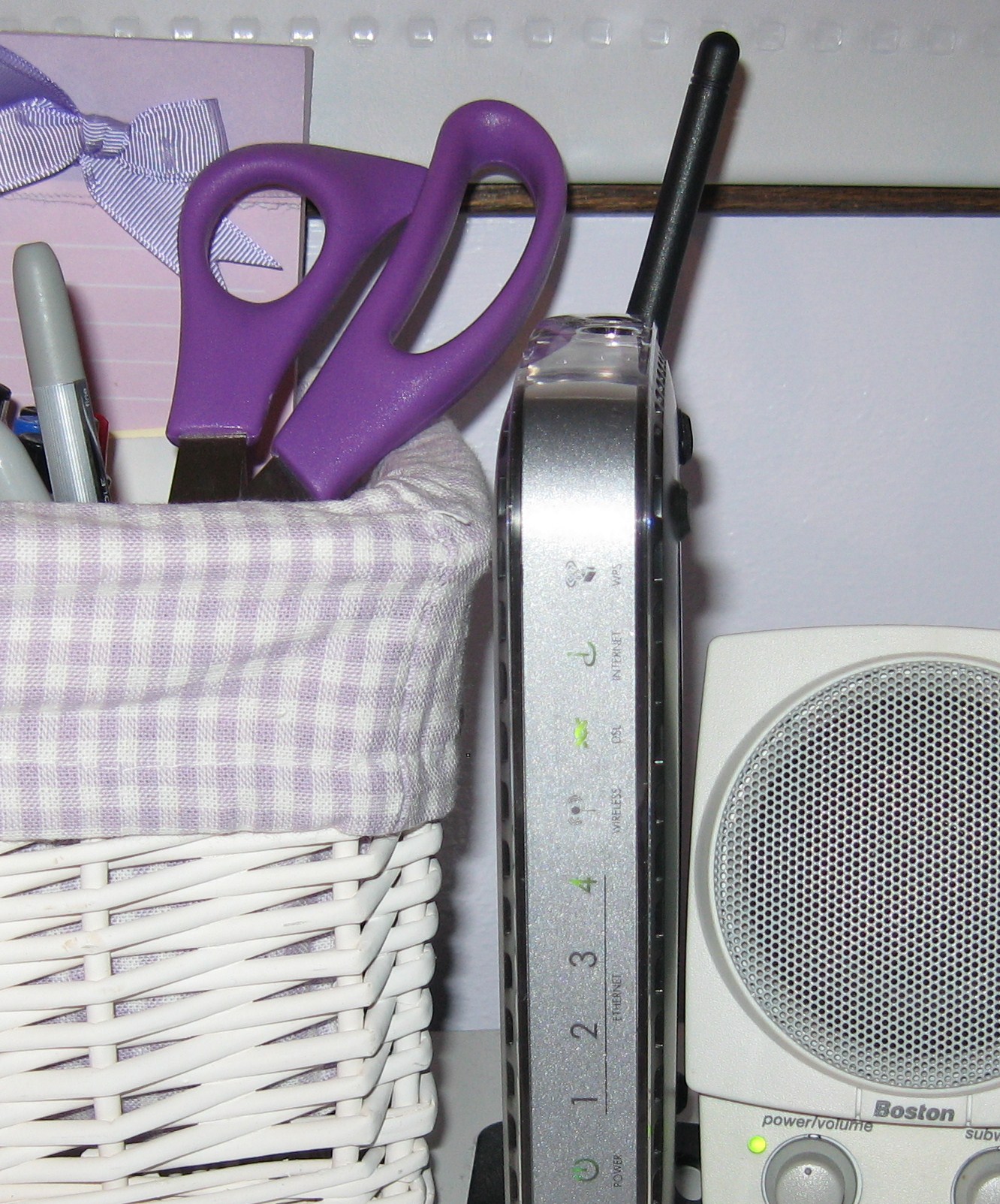
Router on Julie's desk--photo by Julie McCarty 2011I do not understand my own actions. For I do not do what I want, but do the very thing I hate.     –St. Paul in Romans 7:15

I was awakened the other day by a little scratchy sound in the next room. Was it a mouse? No…maybe my husband was hauling out spring clothes? No, it was taking too long for that… Was he cleaning the house? . . . REALLY? At five in the morning?! 

When I dragged myself out of bed, I discovered the internet wasn’t working and Terry was trying to get the web up and running by unplugging and resetting various cords. 

After he left for work, I kept trying to fix it, without success. Eventually, I told myself it didn’t matter–I’m a writer for goodness sake: get to work!

But, try as I might, I was restless and jittery. How could I work without checking e-mail and reading the morning news online? I kept looking at the little red light on the router, flashing at me.

I was like a little baby who has had her milk bottle wrenched away, mid-sip. I want! I want! I want e-mail! I want to blog! I want to revise my website! Waaaaaahhh!

(So far I don’t have Facebook or Twitter accounts, and you can see why these options may not be good for me.)

While I was sitting at my desk, having mental internet withdrawal symptoms, I remembered a phrase from old-time spirituality books:  “inordinate attachments.” These are things in life that we cling to in a way that is excessive or beyond what is spiritually healthy.

Attachments are not necessarily bad in and of themselves, but sometimes they keep us from focusing on the really important things in life. For example, using the internet to do scholarly research is a good thing, but it might be an attachment if I simply cannot pull myself away to fix my family dinner.

While few people today speak of “inordinate attachments,” modern author Judith Wright communicates a similar idea when she speaks of “soft addictions.” As she describes in an interview with WebMD, “Soft addictions are those seemingly harmless habits like watching too much television, over-shopping, surfing the Internet, gossiping — the things we overdo but we don’t realize it. . . It seems like normal behavior, but that’s simply because everyone is doing it, too.” (To read the full article, click here.)

Lent is a good time to step back from our busyness and take stock of our lives. Are we too attached to some things? Do soft addictions keep us from having any time for prayer? Are there relationships in our lives that push us into doing things we know are bad for us? Do we find our attachments growing into bad habits that may evolve into the type of sin that hurts others or ourselves?

In spirituality, the opposite of attachment is detachment, the ability to let go of things. This letting go is done for the sake of a greater good. A person might detach from her fondness for eating in restaurants during Lent so she can use the money saved to feed starving children. A student who finds his schoolwork is not getting done “lets go” of chatty texting in order to succeed in his studies.

Practicing detachment is one way to open ourselves more fully to the action of grace and the presence of the Holy Spirit. We find the ultimate detachment in Jesus, who, while on the cross, opened his hands wide and let go of his life with the words, “Father, into Your hands I entrust my spirit.”

No Man Is an Island: Praying for Japan


Cherry blossoms
In Japan, cherry blossoms symbolize many things, including beauty and the transitory nature of life. (Click once or twice on the picture to enlarge it.) Photo by Radu Razvan Gheorghe--Dreamstime.com


As I write this, Japan is dealing with the aftermath of the recent earthquake/tsunami and experiencing the agonizing wait-and-see regarding damaged nuclear power plants. All the world watches and prays with them.

 As it so happened, just after the disaster hit on the other side of the world, I was reading a book that quoted this famous passage written by English poet John Donne (1572-1631):

 No man is an Iland, intire of it selfe; everyman is a peece of the Continent, a part of the maine; if a Clod bee washed away by the Sea, Europe is the lesse, as well as if a Promontorie were, as well as if a Mannor of thy friends or of thine own were; any mans death diminishes me, because I am involved in Mankinde; And therefore never send to know for who the bell tolls; It tolls for thee.

 This reflection is but a portion of Meditation XVII, found in Donne’s book called Devotions Upon Emergent Occasions, written while John Donne was confined to bed with a long illness. He would listen to the church bells calling people to gather for prayer. Sometimes the bells signaled a funeral–whose funeral might it be? Would the person who lay dying know the bells were calling people for a funeral? John Donne even wonders if perchance the bells are tolling for his own funeral, but is too sick to comprehend that the bells are for him.

 While pondering the meaning of the bells and the human condition, he comes to the awareness that we are all interconnected by the fact of our human nature. When one suffers, we all suffer. The suffering is not identical, of course, but when one suffers, we all feel the effects. When one rejoices, we can rejoice with them. We are not isolated, unfeeling robots, but rather members of the one human family.

 In Donne’s meditation, England is the “island” that appears separate from continental Europe, but is not really alone. When I read the passage the other day, I thought of the islands that form Japan, seemingly separate from the rest of Asia, but now, in our day, an important culture and piece of the bigger global community. Here is a more modern version of the passage:

 No man is an island, entire of itself; every man is a piece of the continent, a part of the main; if a clod be washed away by the sea, Europe is the less, as well as if a promontory were, as well as if a manor of thy friends or of thine own were; any man’s death diminishes me, because I am involved in mankind; and therefore never send to know for whom the bell tolls; it tolls for thee.

Today, we remember the people of Japan in our thoughts and prayers: O God, be with all those who suffer pain, grief, confusion, and the exhaustion of natural catastrophes. Guide and strengthen the arms of those who rescue and minister to the needs of others. Give us the courage to do what we can to support and comfort all those in need. Amen.


 Note: Reuters News Service has a list of relief agencies serving in the crisis in Japan. To view this list and donate, click here.

 Selected sources consulted for this post:

 Link to the source of cherry blossom photo:

 http://www.dreamstime.com/free-stock-photo-flower-net-rimagefree84837-resi1238037


Waiting for Spring

Waiting for Spring 2 -- Photo by Julie McCarty 2011


I took this photo a couple of weeks ago in Lebanon Hills Regional Park, a place not far from my home in Eagan, Minnesota. We’ve had more snow than usual this year, and on this day, the sun was out (on and off!) and there was a temporary thaw underway.

It may be difficult for people in warmer climates to imagine the joy I felt walking outside in weather like this, but it was exhilarating. The milder temperatures of the day allowed me to take deep breaths and walk freely across the crunch, crunch, crunch under my feet. Lebanon Hills is such a huge area of woods, meadows and lakes that I felt the wonder and happiness I often feel when submerged in a nature walk.

The canoes in the picture, the little naked patch of land, and the water sitting on top of the frozen lake remind me that spring is coming–even if it seems like winter lasts forever. Little by little, the daylight hours are growing longer, something that gives me renewed energy.

Today is Ash Wednesday, the beginning of the church season called “Lent,” a word that comes from the English word for “spring,” the time of year when the days lengthen (Lent, lengthen). Just as the warmer temperatures melt the snow, we allow God to melt the places in our hearts that are harsh, icy, or cold. We focus more intentionally on spiritual things to make room for whatever growth the Spirit wants for us. We die to sin in order to be ready for the springtime of resurrection.

On this day, I wish you a good Ash Wednesday and a very blessed Lent. Until next time, Amen!

P.S. If you want to see a larger version of the photo for your own meditation, try clicking on the picture.

A Personal Focus for Lent

The Lord said to Moses, “Come up to me on the mountain, and wait there. . . . Moses was on the mountain for forty days and forty nights.  (Exodus 24:12, 18)

 Then Jesus was led up by the Spirit into the wilderness to be tempted by the devil. He fasted forty days and forty nights. . .     (Matthew 4:1-2)

Ash Wednesday is just around the corner, and I’m wondering what spiritual practice I might do for Lent. If you are like me, you have experienced various Lenten penances related to prayer, fasting, and almsgiving over the course of your life. Some of my experiences produced quality spiritual growth. Other times I failed to follow through or had results that were, um, a little “silly” (such as the time I gave up potato chips and ate so many chocolate chip cookies that I actually gained weight during Lent).

Waiting for Spring -- Photo by Julie McCarty 2011

One spiritual practice that has been meaningful for me is reflecting on a single word, phrase, or bible verse for the whole 40 days. For example, one year I focused on the virtue of patience. I read about patience and pondered what patience is and what patience is not (laziness or procrastination). I asked God in prayer to help me be patient. When life brought me annoying moments, I tried to be patient.

One possible pitfall of this theme approach is that I might forget to follow through for the entire 40 days, but I have found ways around that. I can post my theme in places I’ll see it, such as the bathroom mirror, refrigerator, computer screen saver or cell phone banner. I can find a book on the topic and spend a few minutes each day reading about it. I can make it a point to weave my theme into prayer time and the routine of daily living. On occasion, I’ve asked spiritual people what they think about the topic.

When making plans for Lent, it’s important—as always—to ask the Holy Spirit to inspire your choices. (Why do I always think of this tip last? It should be first!) The “theme approach” may not be for everyone.   Think about what will build your relationship with God, and what will deeper your love for others.      

May all we do glorify God and build bonds of love throughout the earth. Until next time, Amen!

Spiritual Aerobics for Lent

   If focusing on a theme doesn’t appeal to you, here are 13 other ideas:                 

  • Volunteer at a food pantry, homeless shelter, or other charitable organization.
  • Plan quality time with your children: eat together, use discussion starters, read together.
  • Organize recycling in your home in order to take care of God’s creation.
  • Visit a lonely or homebound person.
  • Reduce the amount of time spent with television, social networking, internet surfing, or video gaming.
  • Listen to inspiring, spiritual music while commuting to work.
  • Care for the body God gave you by increasing your sleep or exercise.
  • Read one book of the bible or other spiritual book slowly and reflectively. 
  • Sort out closets and donate clothing to those who need it. 
  • Teach your children a new prayer and pray it together when you gather for meals.
  • Be kind to someone you often ignore. Pray each day for him or her. Smile genuinely and listen respectfully to this person.
  • Fast from shopping for clothes (or books, electronic gadgets, makeup, etc.)
  • Visit a retreat center. If you cannot go away on a retreat just now, make arrangements to go on retreat later this year.